
Choosing parking permit decal materials is an easy process, right?. You would think – but there are more options than most parking program managers expect — and each one exists for a reason. It first starts with your goals for the permits you want to issue. What’s the use and life of your parking permit? Who will use them? Clear vinyl or polyester? Permanent adhesive or removable? Inside the window or on the bumper? Destructible paper or void polyester? Reflective or Prismcal ® for anti-counterfeiting? The wrong choice means permits that peel in a hot parking structure, decals that transfer between vehicles when they shouldn’t, or materials that can’t stand up to enforcement scrutiny.
There is some good news though: it doesn’t have to be complicated. Decal material selection comes down to a handful of real-world questions about where the permit will be applied, whether it needs to be transferable, and how long it needs to last. This guide walks through every decal material Rydin offers, explains the key trade-offs, and helps you match the right material to your specific program.
Related: Not sure whether a hang tag or a decal is right for your program? Read: Hang Tags vs. Decals — Which Parking Permit Is Best? · To learn about hang tag options and material choices:, see: Parking Permit Hang Tag Materials: The Complete Guide
Before looking at individual materials, there are three questions every parking program manager needs to answer. Your answers will narrow the field quickly and point you to the right material family.
This is the most fundamental split in decal material selection. Inside-window decals are printed in reverse so the design reads correctly from outside the vehicle They’re protected from the elements, harder to tamper with, and by far the most common format for parking permit programs. Outside and bumper decals face direct UV, rain, temperature extremes, car washes, and potential physical abrasion— so they require materials and ink rated for exterior exposure.
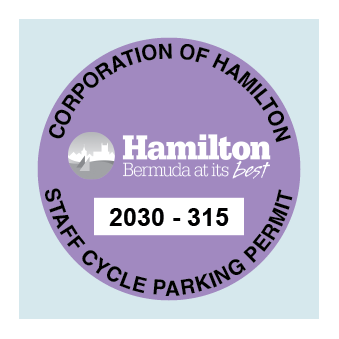
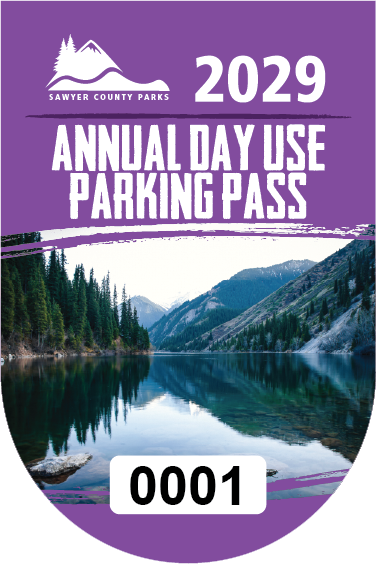
The practical rule: If you’re running a standard parking permit program, you’re almost certainly using inside-window application. Outside/bumper materials are specified when inside application isn’t practical — heavily tinted windows, vehicle restrictions on adhesives, or when enforcement specifically requires exterior placement.
This single requirement drives one of the biggest material decisions. Transferable permits need a removable or low-tack adhesive that allows for clean movement between vehicles without tearing or leaving residue. Non-transferable permits use a permanent or aggressive adhesive — and ideally a destructible or semi-destructible material that cannot be removed intact.
The practical rule: If a permit is assigned to a specific vehicle or license plate, non-transferable materials are the right call. If the goal is to have the permit easily removed after its useful life is over, transferable permit materials are the way to go.
Decal durability spans a wide range, from oil change decals that only need to survive for a shorter period of time to residential permits that need to hold up for a year through heat, cold, and car washes. Matching material durability to program length matters for both performance and cost — over-specifying adds unnecessary expense; under-specifying means failed permits in the field mid-program.
Rydin’s decal materials fall into four main groups. Understanding them first makes it easier to navigate the individual options.
White vinyl is a 4-Mil sturdy material with a high-tack adhesive designed specifically for exterior, outdoor applications. It’s the standard for the majority of bumper stickers you see. . This material is “beefed” up for outdoor use – and much more robust in comparison to thestickers you may see on people’s water bottles. It’s flexible enough to conform to curved bumper surfaces, weather-resistant, and built to hold up against UV, rain, car washes, and road debris. Use it for any application that goes on the outside of the vehicle rather than the inside of the window.
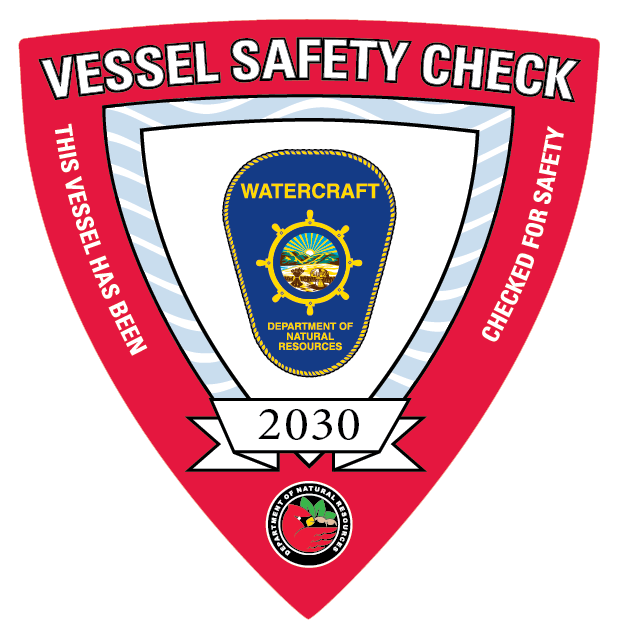

The removable versions of Clear Vinyl and Polyester use a low-tack adhesive that bonds securely but can be cleanly repositioned or moved between vehicles without leaving significant residue. This is the right material when the program requires transferability or just wants the product to be easily removed at the end of its useful life by the end user. For example, like semester-based parking permit programs where decals are removed and reissued each term, or any situation where clean removal is a program preference.
The same basics mentioned above for White Vinyl and Polyester with permanent adhesive are true for these materials. The main difference is the ease or removal for these materials. One difference is that Clear Vinyl would not be recommended for outside/exterior application. It would be recommended for internal use only and better on curved surfaces, than polyester.
The real difference: Removable vinyl or polyester is the right call for flexibility. If your program needs transferability or just wants the permits easier to remove when they expire, step up to removable adhesive.

Static cling vinyl uses no adhesive at all. It adheres to glass through static electricity and can be repositioned without leaving any residue. The trade-off is that it’s sensitive to dust, dirt, and fingerprints, which gradually reduces its ability to stay in place. Rydin typically recommends removable adhesive vinyl over static cling for most programs. But for very short-term or event use where a completely adhesive-free product is a firm requirement, it works well.
Important note: Customers who choose static cling need to be ready and willing to replace decals that stop adhering. It’s the nature of the material, not a defect. We recommend ordering extra, especially in yearlong programs.
Acetate is a clear, semi-destructible material for inside-window applications. It’s among the most popular choices with municipal and university customers because it provides meaningful anti-transfer security without being as difficult to remove as paper destructible materials. Acetate is very difficult, but not impossible. to remove without damage. Someone trying to peel it off will leave visible signs of tampering, and the permit itself is unlikely to survive the attempted removal.
The key distinction: If your parking permit program calls for permits with destructible properties but fully destructible paper seems to aggressive for your users, acetate is the right middle ground. It’s the go-to for programs that want serious anti-transfer security in a clear material.
NOTE: Semi destructible can theoretically be removed in one piece with significant purposeful effort. Destructible papers cannot be removed in one piece at all.
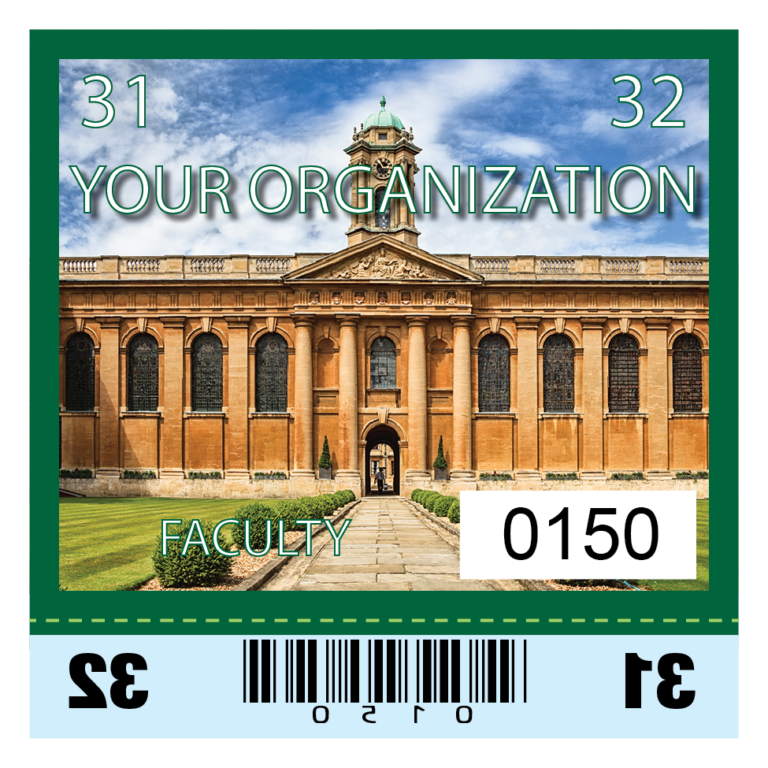
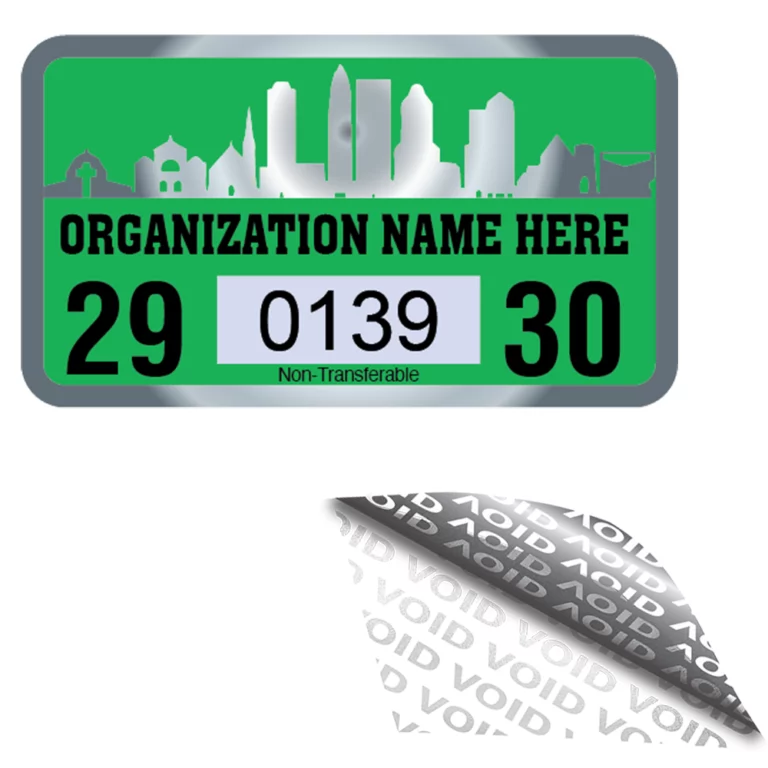
Silver void polyester has a specialized adhesive that separates into two layers when the decal is removed leaving the word “VOID” cut out of the permit and adhered to the surface it was applied to. Any attempt at removal or transfer makes tampering immediately and permanently visible. Engineered for single use only. The silver metallic finish also adds an inherent anti-counterfeit element, as the material appearance is difficult to reproduce.
Functionally identical to the silver void material. With the same “VOID” reveal on removal, and same tamper-evident performance. Now with a white finish rather than metallic silver. Choose white for programs that prefer a cleaner, less conspicuous appearance while maintaining the same single-use security.
an alternative laminate option available for both 23-Mil and 35-Mil polyethylene. It creates a prismatic, rainbow-like visual effect that catches light dramatically and is essentially impossible to replicate. It’s ideal for programs with a daytime parking permit counterfeiting problem. Once it’s in use, a standard color copy looks nothing like the real thing.
This is one of those materials that’s better experienced than described. Request a sample to see the Void effect in person.
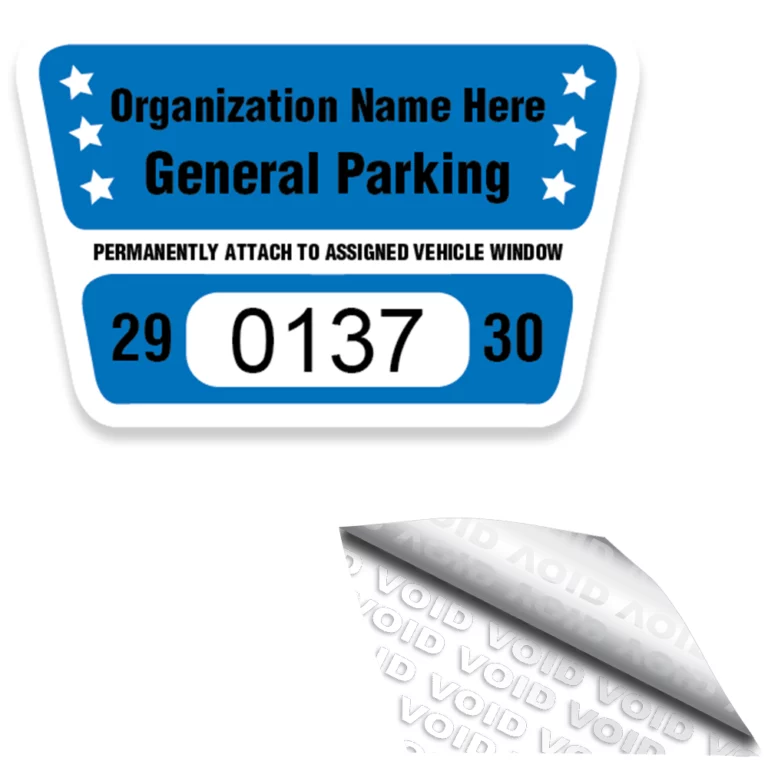
Destructible paper decals are engineered with one purpose in mind: making unauthorized permit transfer impossible. They use a permanent adhesive and a material that tears and fragments into small pieces when someone tries to peel them off — leaving visible evidence of tampering and rendering the permit impossible to reuse. They are the highest-security standard material for anti-transfer applications.
The 80# white gloss cover is Rydin’s strongest anti-transfer decal material. It’s a smooth, bright white paper with a permanent transfer adhesive that creates an exceptionally strong bond. Removal is extremely difficult. The material tears into confetti-like pieces that cannot be reassembled or repositioned. It also prints beautifully, accepting high-quality full-color reproduction that makes it a professional-looking choice alongside its security performance.
Security add-on: Rydin can apply Metallic Blast℠ hologram or Metallic Blast℠ foil to this material for an additional anti-counterfeit layer. Making the permit even harder to duplicate while adding a distinctive visual security mark.
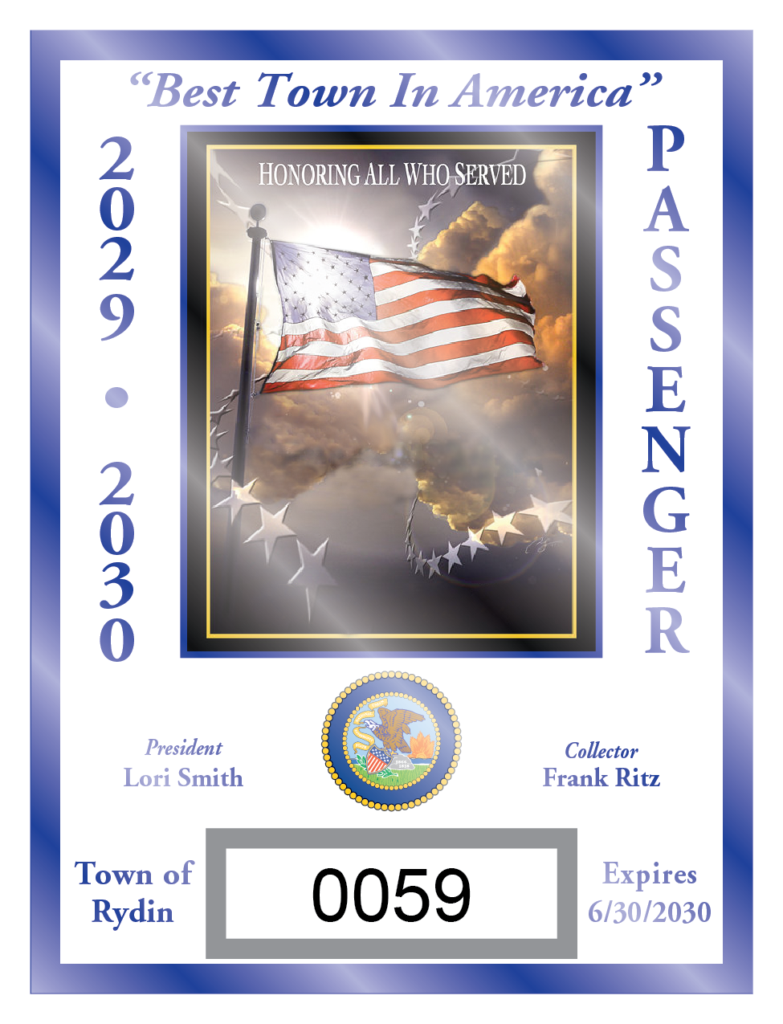
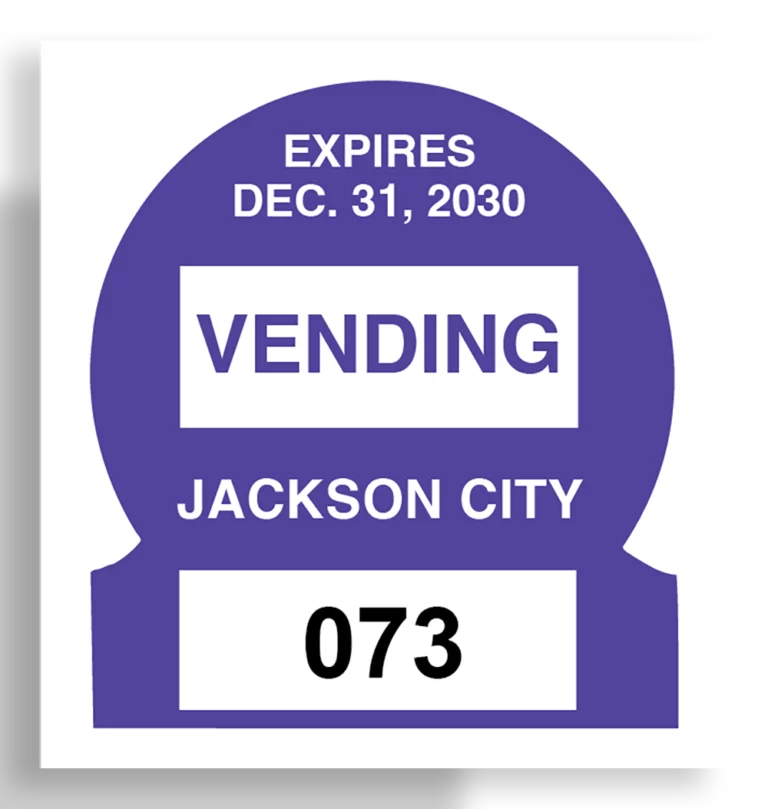
Litho white paper is a destructible material that comes with a matte or semi-gloss. The matte finish is the easiest to write on with a standard pen or marker. The semi-gloss can be written on also, but doesn’t absorb all inks as quickly or consistently as the matte finish. Both finishes are highly destructible with the same permanent adhesive. Both are considered non-transferable materials.
It is common for these materials to be used for products like Vending Machine decals or even visitor passes. Some customers like to create custom warning labels with this white material so they can print their own custom background color for the warning labels. The material does work best when used indoors but is also good for temporary use outside like warning labels.
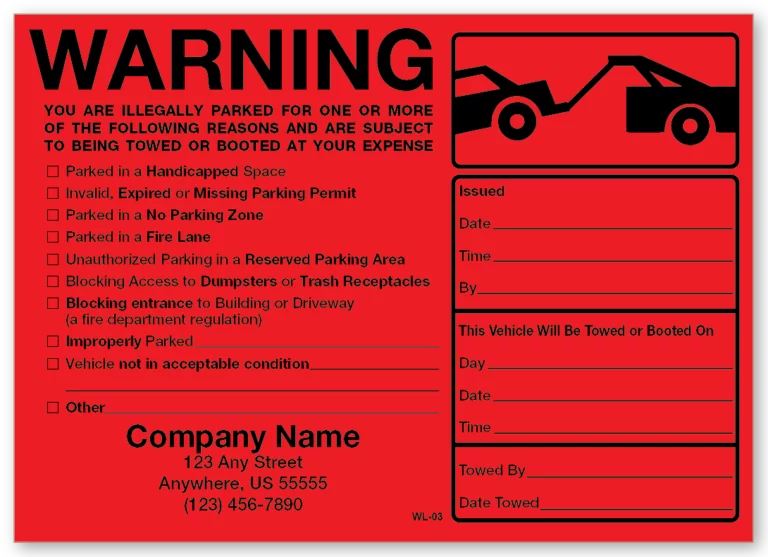
Red fluorescent litho is a specialty destructible material designed specifically for enforcement applications and commonly used in parking enforcement. The fluorescent red material is highly visible, immediately attention-grabbing, and — by design — particularly difficult and unpleasant to remove. That difficulty is part of the enforcement value. Tears into pieces on removal, leaving clear evidence of the violation and the attempt to remove it.
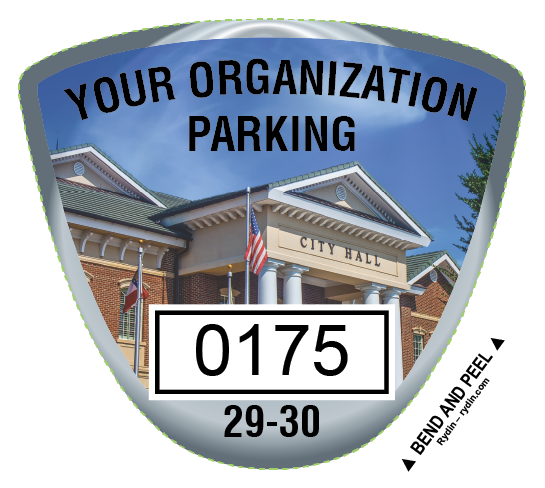
Reflective engineering grade is a semi-destructible bumper decal that reflects light from vehicle headlights or officer flashlights. Officers can sweep a light down a row of parked vehicles and immediately identify which cars have valid permits by their reflective return. That’s the operational value – faster enforcement with less effort, particularly in overnight or structured parking environments.
The semi-destructible construction also makes the material very difficult to reposition or transfer intact, giving it inherent anti-transfer properties alongside its visibility benefit. An additional advantage: reflective engineering grade material cannot be duplicated on a standard copier or home printer, making it naturally anti-counterfeit.
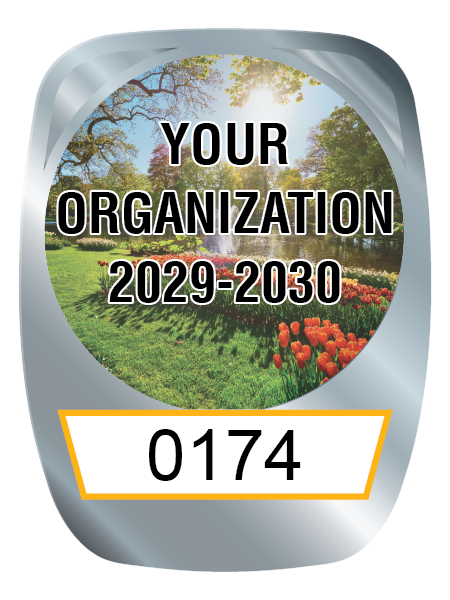
The inside window reflective (IWR) material provides the same nighttime enforcement visibility as the engineering grade bumper material, in a format designed for inside-window application. It’s a clear polyester base laminated with a reflective surface. IWR is available with either a permanent adhesive (very difficult to transfer) or a removable adhesive (easier to reposition). This is the right material when your program needs reflective night enforcement capability but requires window application rather than bumper application — for example, residential programs where bumper decals aren’t appropriate.
Two versions: Permanent adhesive IWR for programs that need anti-transfer alongside reflectivity; removable adhesive IWR for programs that need reflectivity with the option to reposition or replace permits.
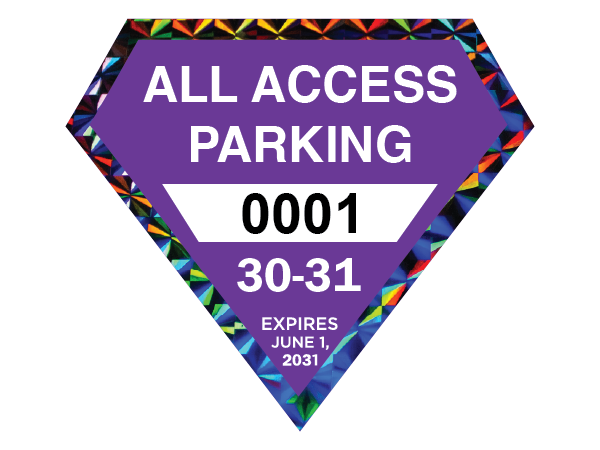
Prismcal® is the most secure anti-counterfeit decal option Rydin offers. It’s a prismatic laminate applied over a clear polyester base that creates an iridescent, color-shifting effect that changes appearance depending on viewing angle. Copy it, photograph it, or scan it, and the reproduction captures none of the prismatic quality — making fakes immediately identifiable.
Prismcal® is available with either a permanent or removable adhesive and can be applied to window or bumper surfaces. If counterfeit permits are a known or emerging problem in your program — or if you’re managing a high-enforcement environment where permit integrity is critical — Prismcal® is the definitive solution. This is one of those materials that’s better experienced than described.
Try it first: Request a Prismcal® sample from Rydin before specifying. Once you see the prismatic effect in person, the decision is usually straightforward.
Use this table to match your program’s requirements to the right material. For full guidance on any material, contact your Rydin representative.
| Material | Application | Adhesive | Durability | Best For | Security Level | Hologram and Foil Ready |
|---|---|---|---|---|---|---|
| Clear Vinyl — Permanent | Window or Bumper | High-tack | Annual+ | General annual programs | Standard | YES |
| Clear Vinyl — Removable | Window | Low-tack | Seasonal/Annual | Transferable permits | Standard | YES |
| Clear Vinyl — Static Cling | Window (inside) | None | Short-term | Visitor / temp passes | Low | N/A |
| Clear Polyester — Permanent | Window or Bumper | High-tack | Annual+ | Hot climates, flat glass | Standard | YES |
| Clear Polyester — Removable | Window | Low-tack | Seasonal/Annual | Transferable + durable | Standard | YES |
| Acetate with 90# Liner | Window (inside) | Permanent | Annual | Semi-destructible, municipalities | Moderate | N/A |
| White Vinyl | Bumper / Exterior | High-tack | Multi-year | Outdoor bumper permits | Standard | YES |
| Silver Void Polyester | Bumper | Permanent | Long-term | Tamper-evident, single vehicle | High | N/A |
| White Void Polyester | Bumper | Permanent | Long-term | Tamper-evident, single vehicle | High | YES |
| Reflective ELG | Bumper | Permanent | Multi-year | Night / garage enforcement | High | N/A |
| 80# Gloss Cover — Destructible | Window (inside) | Permanent | Short–Annual | Visitor passes, max anti-transfer | Very High | YES |
| Matte Litho — Destructible | Window (inside) | Permanent | Short-term | Writable visitor passes | High | YES |
| Semi-Gloss Litho — Destructible | Window (inside) | Permanent | Short-term | Visitor passes, pen-writable | High | YES |
| Prismcal® Lam. over Polyester | Window or Bumper | Perm or Removable | Multi-year | Maximum anti-counterfeit | Highest | N/A |
| IWR Reflective Laminate | Window (inside) | Perm or Removable | Annual+ | Night enforcement, inside-glass | High | YES |
Material selection is your first line of defense. Rydin can layer additional security features on top of the base material for programs that need a multi-level approach.
Rydin Permit Express® (RPE): Rydin’s parking management software integrates with your permit program to manage issuance, track assignments, and support scan-based field verification. Learn more about RPE and request a free demo or ask your representative how Rydin Permit Express® fits your program.
Choosing the right parking permit decal material is one of those decisions that seems minor until something goes wrong mid-program — permits peeling, decals unintentionally being transferred between vehicles, or a counterfeiting issue that could have been prevented. The right material choice means better enforcement, fewer program headaches, and lower total cost over the life of your permit cycle.
Rydin brings 70+ years of manufacturing expertise to every custom parking decal program. Our team works with parking managers at universities, municipalities, property managers, and businesses every day — helping match materials to specific environments, enforcement workflows, program lengths, and security requirements.
| What Sets Rydin Apart | What It Means for Your Program |
|---|---|
| Material variety | From static cling visitor passes to Prismcal® anti-counterfeit laminates — every program type has the right option |
| Adhesive expertise | Permanent, removable, and void adhesives — matched to your application and environment |
| Advanced security | Void polyester, Prismcal®, Metallic Blast®, reflective, and custom anti-counterfeit combinations |
| Customization | Full-color printing, sequential numbering, barcodes, QR codes, license plate printing, and full branding |
| Peace of mind | Every product backed by a 1-year guarantee under normal use conditions* |
| Expert guidance | 70+ years of permitting expertise across universities, municipalities, HOAs, and businesses |
Clear polyester with a permanent adhesive is the most durable standard window decal material for annual programs. It resists tearing, holds up in high-heat environments, and maintains adhesion over multi-year programs better than vinyl. For programs that need maximum durability and anti-counterfeit security combined, Prismcal® laminate over polyester is the top option.
Both are clear film materials, but they behave differently. Vinyl (4-Mil) is thicker, more flexible, and better for curved surfaces. Polyester (2-Mil) is thinner, stiffer, and significantly more heat-resistant. In moderate climates, either works well for flat window applications. In hot climates or high-sun environments, polyester is the clear better choice.
A destructible parking permit decal is engineered from paper with a permanent adhesive that tears into pieces when removed. The permit cannot be peeled off in one piece and therefore cannot be transferred to another vehicle. Destructible decals are the strongest anti-transfer option available in standard decal materials and are widely used for visitor passes and municipal programs.
Void polyester uses a specialized adhesive that separates into two layers when the decal is removed — leaving the word “VOID” printed on both the permit and the surface it was applied to. Any attempt at removal or transfer becomes immediately and permanently visible. It’s engineered for single-use, single-vehicle applications. Available in silver (metallic) and white finishes, intended for bumper application.
Reflective materials are purpose-built for nighttime enforcement. Reflective Engineering Grade (ELG) decals for bumper application reflect light from officer flashlights, allowing officers to verify permit validity without leaving their patrol vehicle. For inside-window application with the same benefit, Rydin’s Inside Window Reflective (IWR) laminate provides the same nighttime visibility in a window-based format.
Standard vinyl and polyester adhesives require a minimum application temperature — typically above 40–50°F — to achieve a full bond. Applying below that threshold can result in initial adhesion that degrades within weeks.
Prismcal® is a prismatic laminate applied over a clear polyester base that creates a color-shifting, holographic-like visual effect that changes with viewing angle. It is virtually impossible to replicate on standard printing or copying equipment, making it Rydin’s most secure anti-counterfeit decal option. It’s the right choice for programs where permit counterfeiting is a known problem or where permit integrity is critical.
Inside-window decals are generally used by most programs. They’re protected from elements, harder to tamper with, and typically cleaner in appearance. Outside or bumper decals are better when inside application isn’t practical — heavily tinted windows, vehicle restrictions on adhesives, or when exterior enforcement visibility requires it. Reflective and void materials are most often specified for bumper applications
Yes. Clear polyester with a removable adhesive is the best option for a transferable decal that doesn’t sacrifice durability. The low-tack adhesive allows for clean removal and repositioning, while the polyester base provides better heat resistance and longevity than removable vinyl. Rydin recommends removable polyester over removable vinyl whenever the program runs longer than a semester or operates in a warm climate.
Rydin offers sequential numbering (for permit tracking and audit trails), barcodes and QR codes (for scan-based field verification), Metallic Blast℠ holographic or metallic ink, hologram foil elements, and license plate printing directly on the permit. The right combination depends on your enforcement model — your Rydin representative can help design a multi-layer security approach that fits your program. Learn all about how to secure a permit with our blog: How Secure Are Your Parking Permits? Fighting Fraud and Counterfeit Permits
Every parking program is different — different climates, enforcement models, vehicle types, and security requirements. Rydin’s team works with municipalities, universities, property managers, and businesses every day to match the right material to the right program.
