
If you manage parking for a university, municipality, HOA, healthcare campus, or event venue, you already know that a permit is more than a simple hang tag or decal — it’s your proof of authorization. It controls access, protects revenue, and tells your enforcement team who belongs and who doesn’t, Parking permit security and user identification go hand in hand!
The problem? Modern home printers and color copiers have made counterfeiting easier and cheaper than ever. People alter expiration dates, photocopy hangtags, peel decals off one vehicle and stick them on another, or simply report a permit lost while continuing to use it. The result is unauthorized parking, lost revenue, and real headaches for your enforcement staff — and for you.
The good news is that the same technology used to secure government IDs, currency, and official credentials can be applied to parking permits. The right parking permit security strategy makes your permits genuinely hard to fake, easy to verify, and nearly impossible to transfer or reuse
In this guide, you’ll find everything you need to know about permit security and active parking permit fraud protection. We’ll break down the types of permit fraud you’re up against, which security features do what, how to build a layered security break down. Plus, you’ll learn how smart distribution practices complete the picture. Think of it as your starting point. — we’ve also put together dedicated guides for each security feature and each industry segment if you want to go deeper.
Ready to see what Rydin’s security solutions look like? Explore Rydin’s permit security options here.
Before you can design a secure permit, it helps to understand what you’re designing against. Permit fraud isn’t just one thing — it takes several forms, and each one calls for a different countermeasure.
Each of these is a real scenario your enforcement staff has probably encountered — or will. The permit design choices you make determine how much time your team spends on fraud versus everything else they need to do.
There’s no single magic feature that solves permit fraud. The most effective permit programs use a layered approach — combining features that serve three distinct functions:
Layer all three and you’ve covered the most common attack vectors. Skip one layer and you’ve left a door open. A beautiful hologram on a permit with no tamper-evident adhesive is still vulnerable to transfer. Serial numbers alone don’t help if enforcement staff aren’t checking them. The strength is in the combination.
Let’s review the various options that can help secure your permits, why they matter, and where they fit in your program. We have detailed guides on each of these if you want to go deeper — see the links throughout this article.
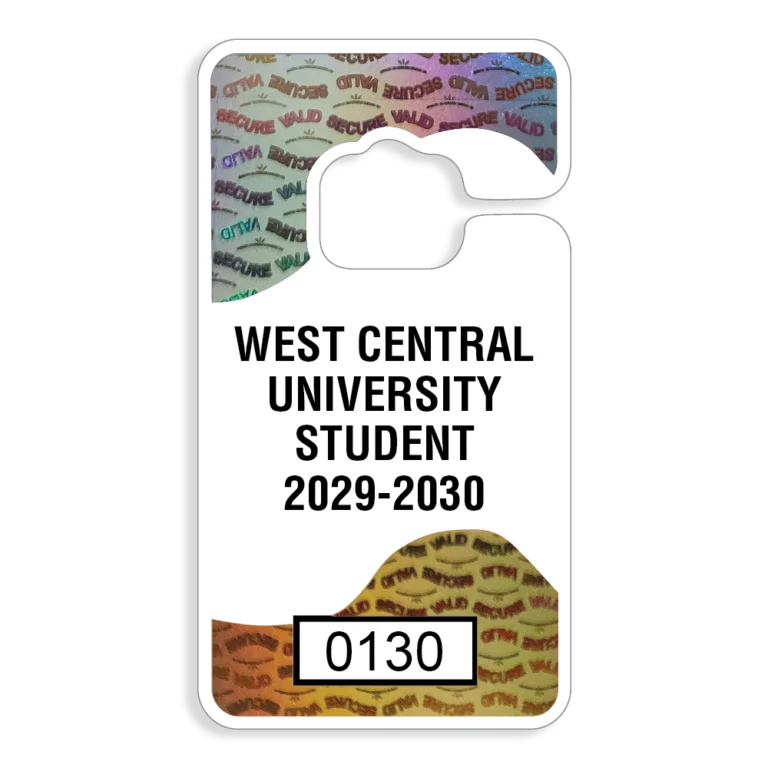
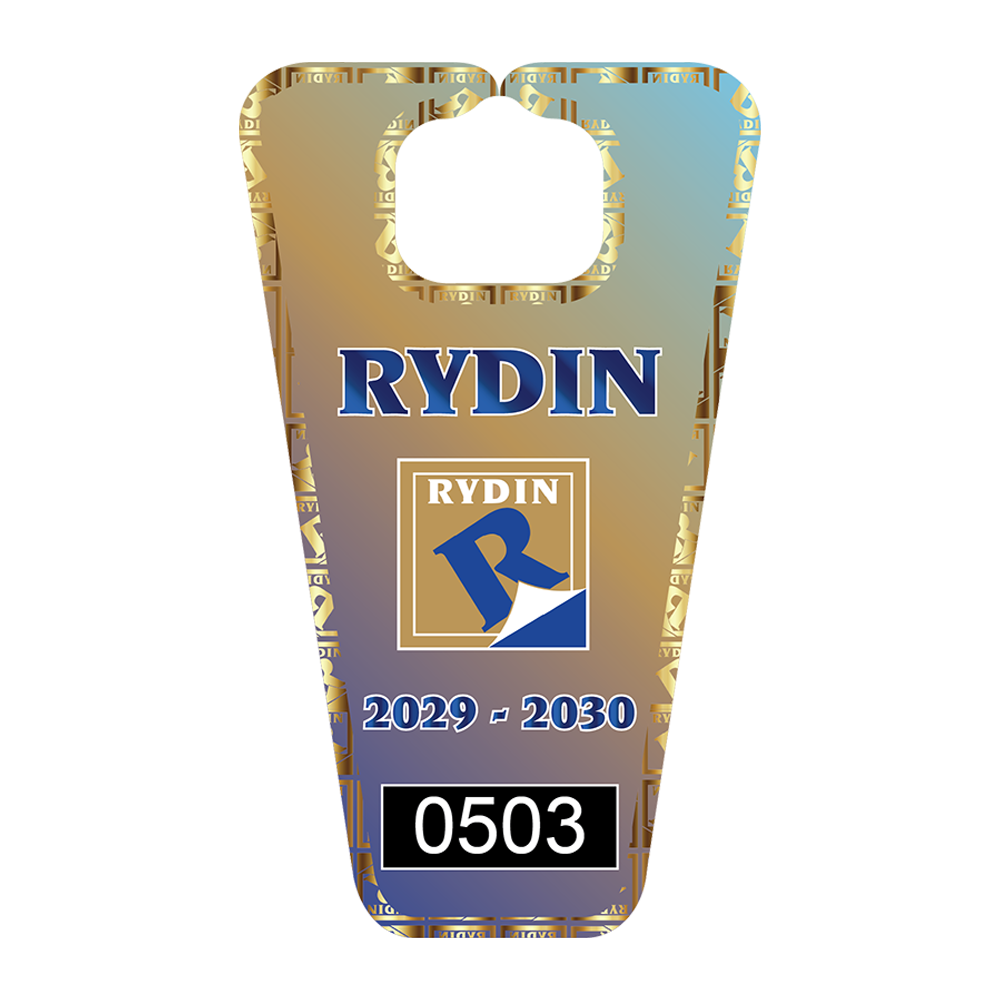
What to consider from Rydin: Rydin offers metallic foils in a range of solid colors, 2D and 3D holographic films, and micro-etched elements within the hologram. Rydin’s Secure & Valid holograms are a Rydin exclusive and cannot be duplicated.
Best for: high-volume programs, gate checks, and any situation where enforcement staff need to verify permits at speed.
Pro tip: Standardize the hologram placement across your entire permit design so enforcement staff know exactly where to look — and know immediately if it’s missing.
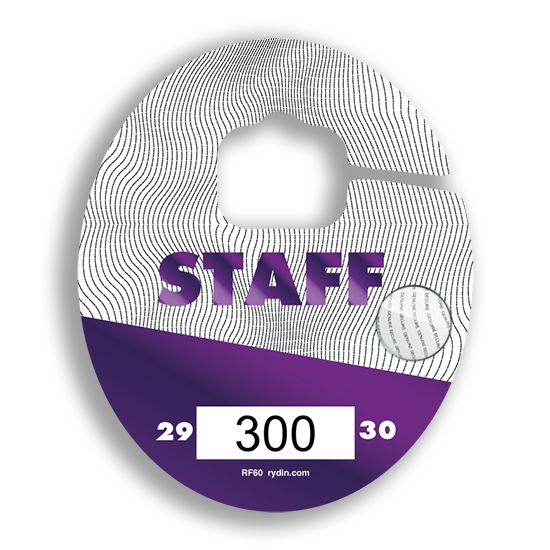
Microprint is text printed at 1-point font — so small it appears to the naked eye as a solid line or decorative border element. It reads clearly under magnification, but when photocopied or scanned, the text distorts, blurs, or disappears entirely. Most consumer printers simply can’t reproduce it.
Cost-effective – and impossible to duplicate: Microprint works quietly in the background — fraudsters often don’t even know it’s there until their permit fails inspection.
Best for: defeating scan-and-print counterfeits; great as a secondary verification tool during spot checks.
Pro tip: Place microprint along a border or around a logo so it reads as a design element rather than a security notice — don’t advertise what you’re doing.
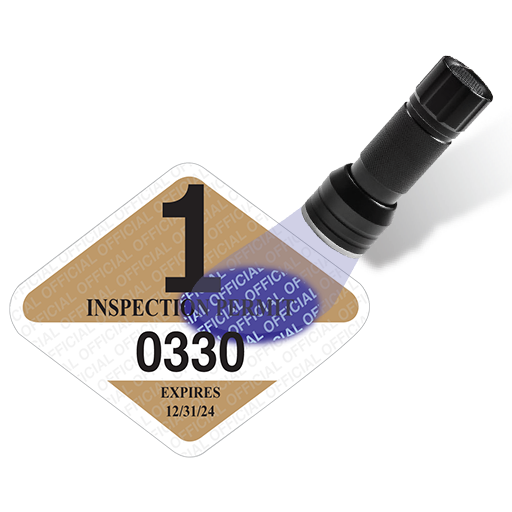
Counterfeit deterrent ink is virtually invisible under normal lighting. Under a Black Light, it reveals a mark, pattern, or text that can only be seen with the right tool. This is your covert verification layer. It’s extremely difficult to replicate without knowing it’s there, and virtually impossible to reproduce accurately without the original printing setup.
Best for: spot checks, night enforcement, and high-security environments where a secondary verification step is warranted.
Pro tip: Keep the UV mark in a consistent location across all your permit designs. Staff should be able to confirm it in seconds
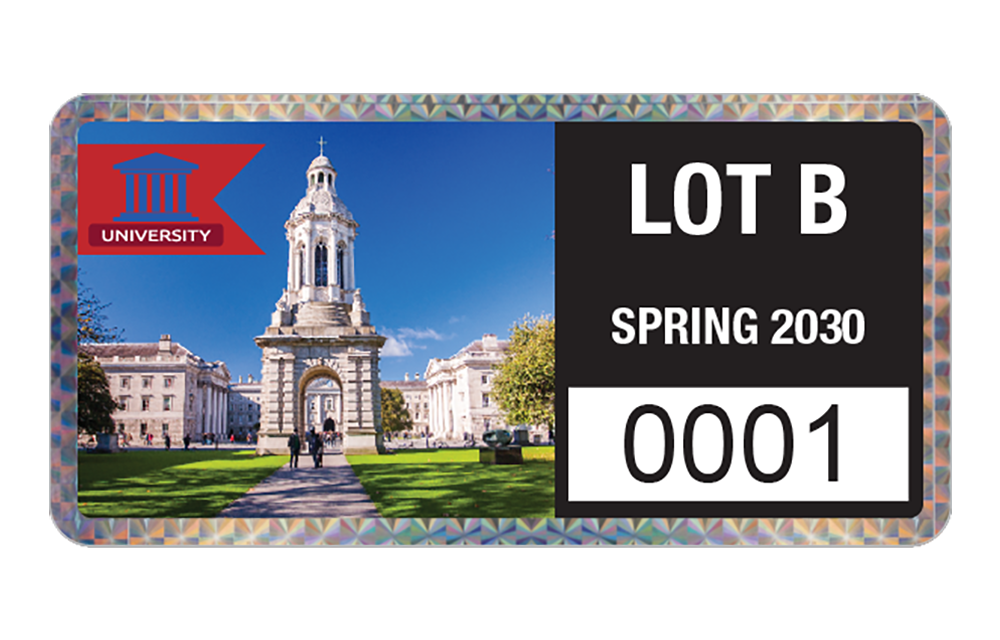
PrismCal® is a light-diffracting, kaleidoscopic pattern — think of it as a holographic effect that shifts and changes depending on the angle you’re viewing it from. It’s eye-catching on purpose, and it’s extremely difficult to counterfeit. You can add it to both hang tags and decals.
Best for: programs that want a distinctive, premium look alongside strong anti-counterfeiting protection. It’s also a great design differentiator — your permits will look like nothing else in the lot.
Standard reflective material reflects light from headlights and flashlights — great for night enforcement. Our Secure and Valid watermark and Official Use Only Watermark material (Suitable for governmental and municipal users), in addition to the reflective property, contains a secure watermark built directly into the surface. You get visibility plus authentication in a single material — double protection, as it were.
Best for: programs with active night enforcement, large outdoor lots, and anywhere enforcement staff are working from vehicles.
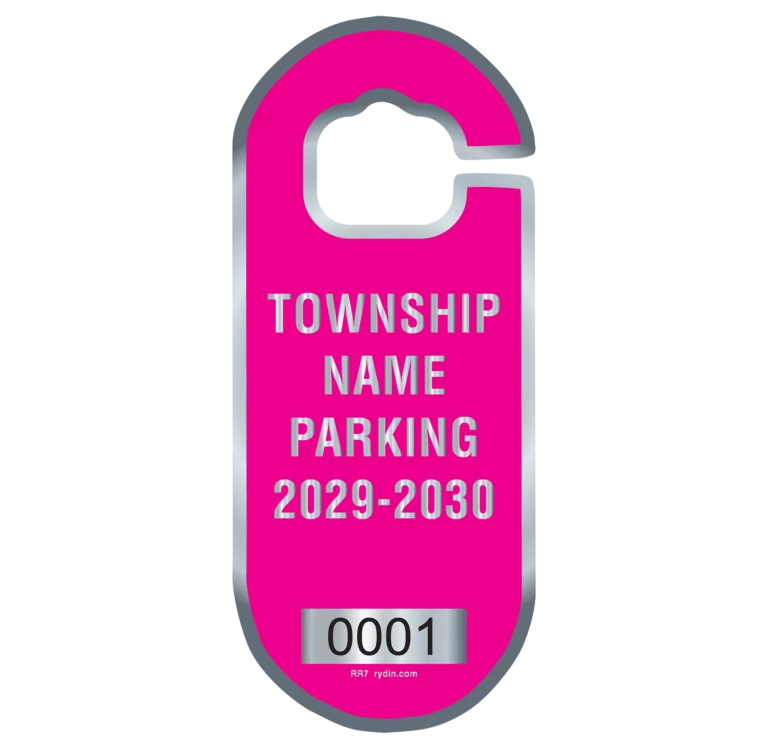
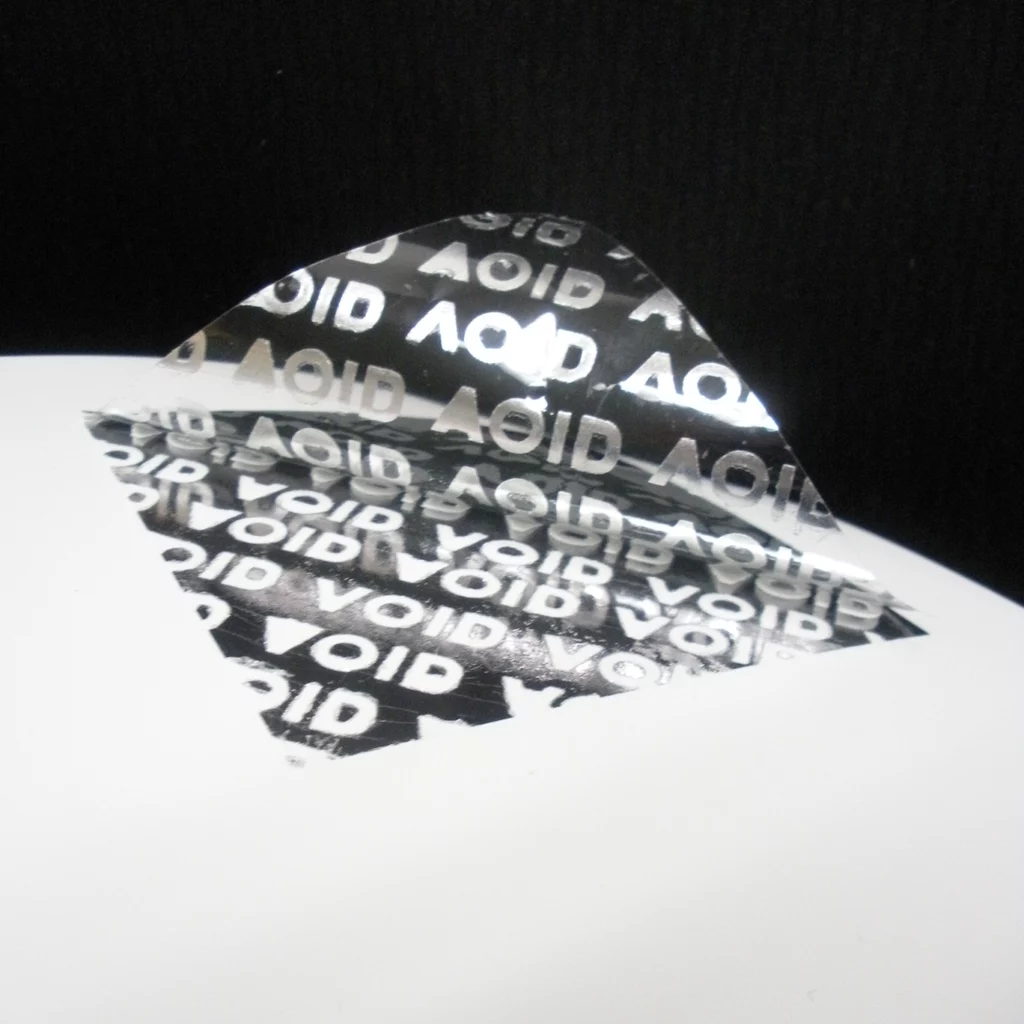
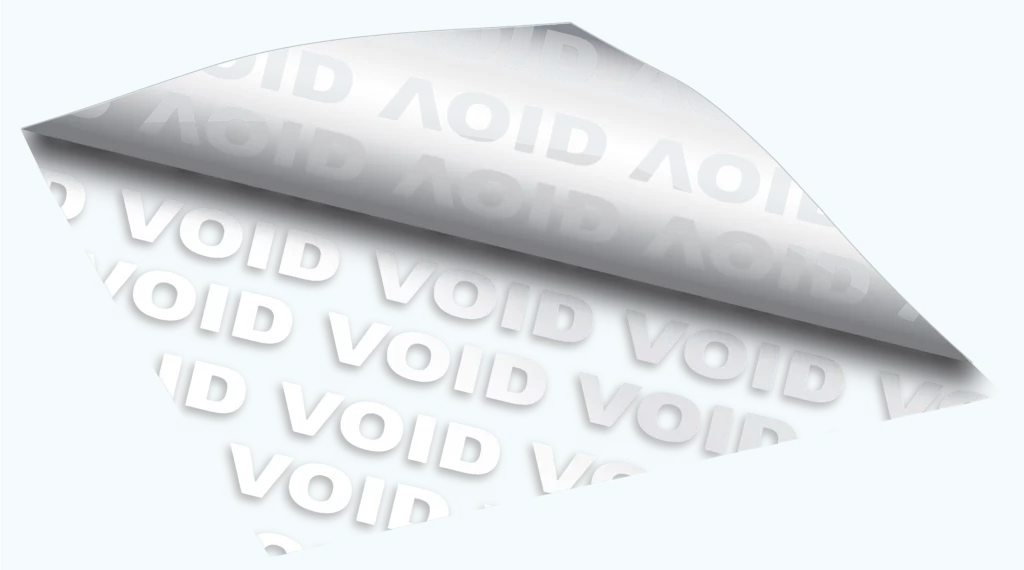
“Void” Polyester is a material with a specialized adhesive that self-destructs on removal. This material creates a tamper-evident parking permit and provides immediate visual indication if anyone tries to peel the permit off a vehicle. This protects against vehicle sharing and reuse. The word “VOID” appears across the permit. The material itself tears and destroys in the process. It’s a single-use product by design.
For programs where decal transfer is a known issue, this is one of the most effective deterrents available.
Best for: decal permits in high-abuse environments, university lots, healthcare campuses, or anywhere transfer and reuse are common problems.
Pro tip: Pair with a clear replacement policy — if someone has a legitimate need to transfer their permit, there should be a formal, documented process for it. This also closes the lost/stolen loophole.
Security slits are cuts in the permit substrate designed to cause the permit to tear on removal. Unlike “Void” polyester, which relies on the adhesive, security slits rely on the physical structure of the permit itself. Attempt removal and the permit self-destructs.
Destructible materials work similarly — the substrate is engineered to break apart rather than peel cleanly, leaving obvious evidence of tampering and making the permit unusable after removal.
Best for: high-use decal programs, permits in environments where people frequently attempt to remove and transfer credentials.
Pro tip Using security slits on destructible material makes the product nearly impossible to remove in one piece. Adding security slits to non-destructible material can give the appearance of destructibility and deter users from trying to transfer them between vehicles.
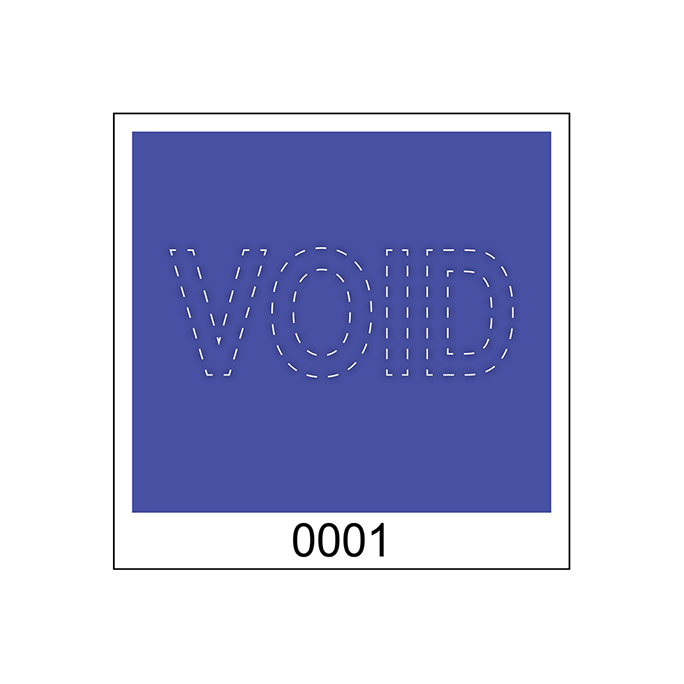
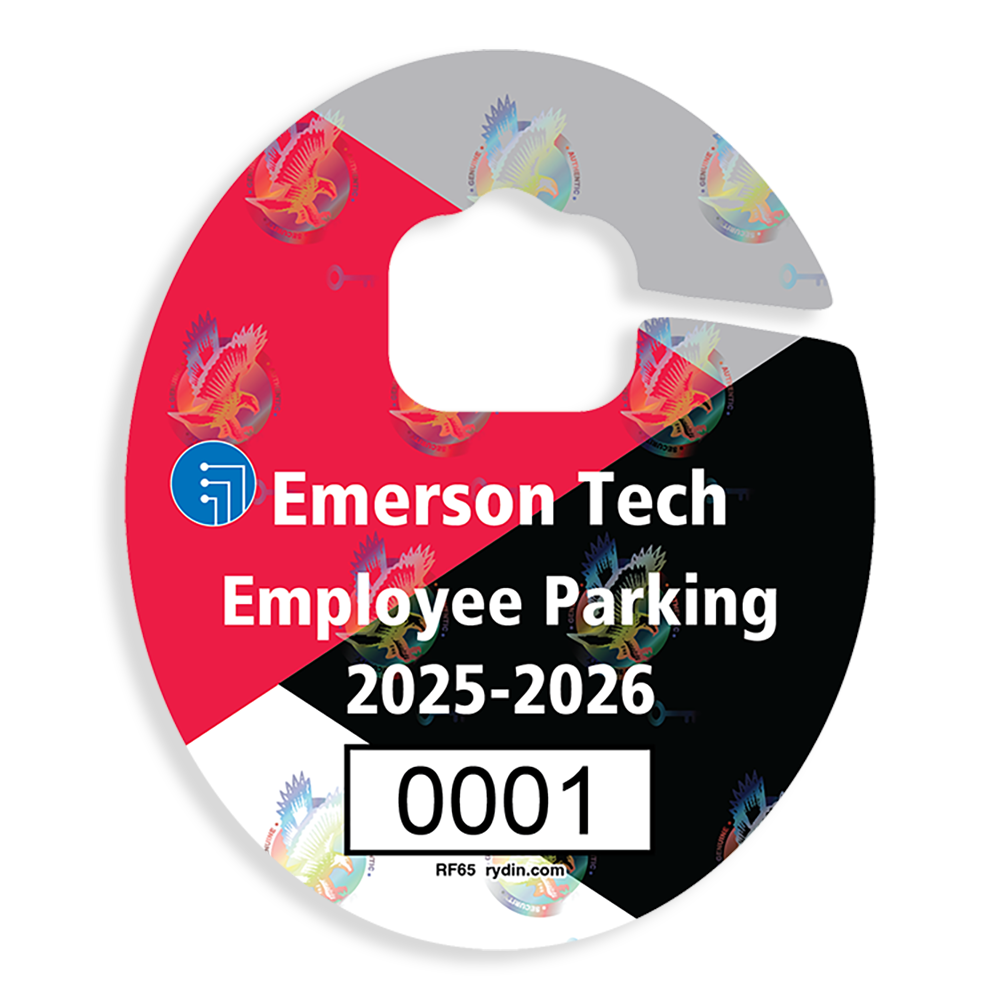
Security lamination protects the permit surface from wear, UV damage, and physical manipulation — but it’s not just protective. Rydin’s holographic security lamination adds a 3D hologram to the entire face of the composite product, making it extremely difficult to counterfeit and resistant to any attempt to alter the printed information beneath.
Customers seeking additional layers of protection have paired security lamination in conjunction with holograms and/or foil stamping to further increase the security of their permit and deter counterfeiting.
Best for: hang tags and permits that face frequent handling, outdoor exposure, or programs where permit longevity is important.
Pro tip: Lamination and color coding is a powerful combination — it speeds enforcement
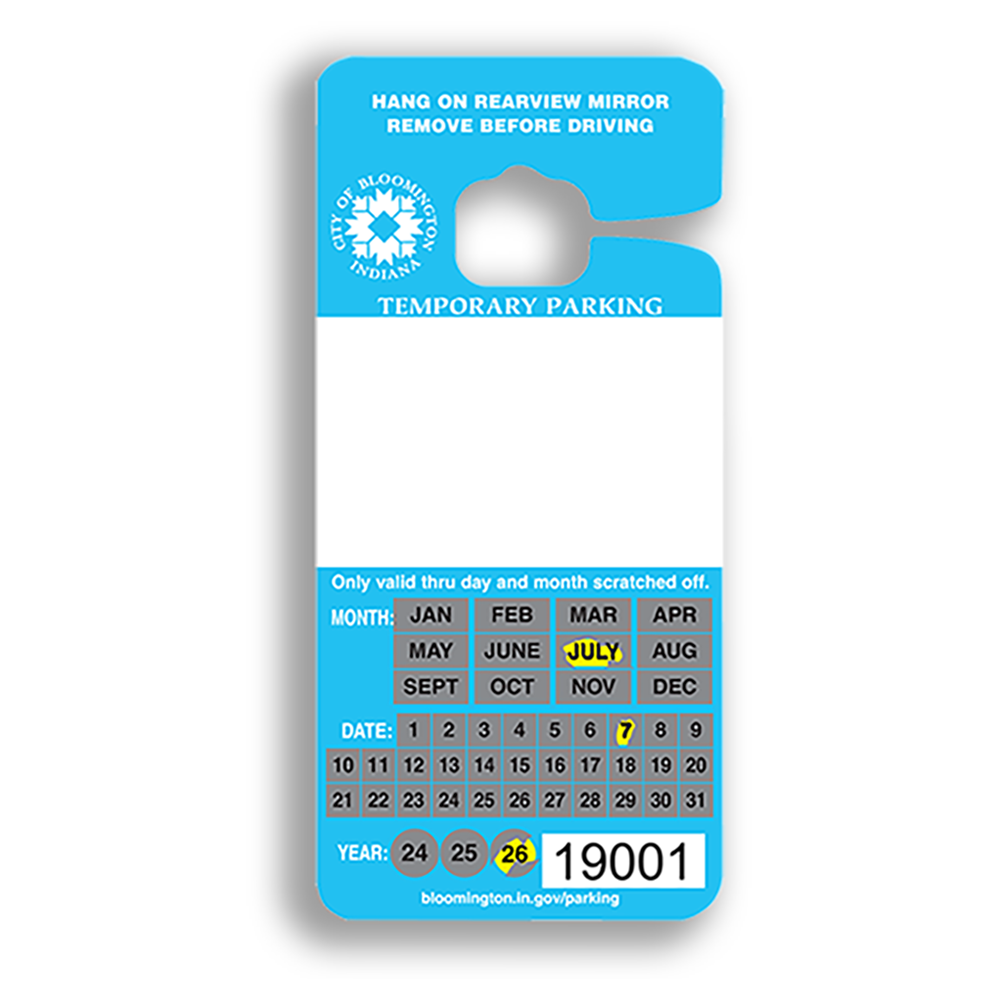
Using a self-printed (construction paper?) temporary permit – and it doesn’t really feel secure enough? Consider scratch off temporary permits to add a little extra security. Scratch-off permit hang tags allow you the ability to assign an expiration date at the moment of issuance. The correct date is uncovered and that becomes the valid date. If more than one date is uncovered, the permit is immediately invalid. In addition to scratch off functionality, scratch off temporary permits can be future secured with holograms, foils, and other features.
This is a smart solution for visitor programs, contractor access, event parking, and any situation where you’re issuing permits for a specific time window and need to prevent manipulation of the validity date.
Pro tip: Print a clear instruction directly on the permit — “Scratch ONLY one date. More than one exposed date = invalid.” Don’t assume it’s obvious.
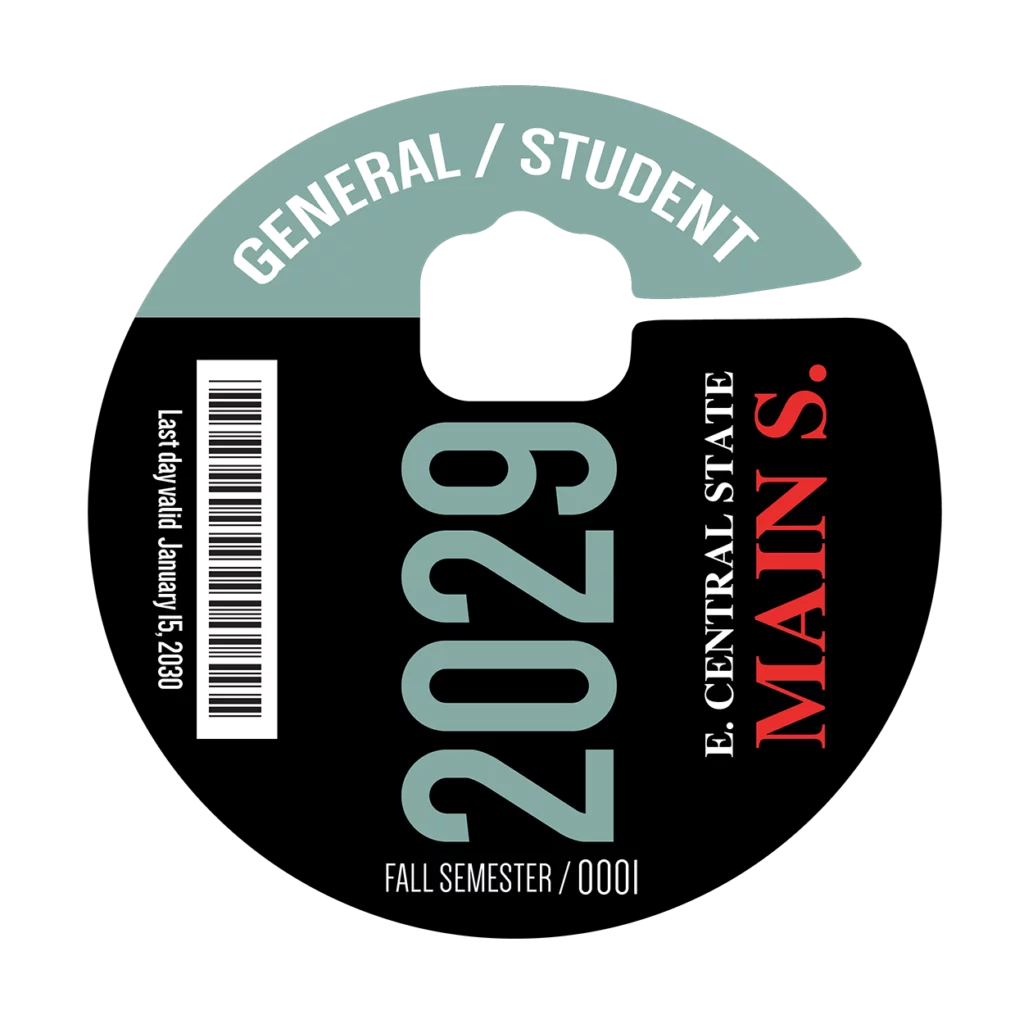
Every permit Rydin produces can carry a unique sequential serial number and/or barcode. This allows you to track each permit and tie it to a specific individual, a specific vehicle, and a specific issuance date. When someone reports a permit lost or stolen, it can be voided in your records. Enforcement can even verify against the database in real time.
This is also your best defense against the lost-or-stolen permits. When the replacement is issued, the original is flagged, and any vehicle displaying that number gets cited. Serial numbers speed up audits, appeals, and dispute resolution dramatically.
Best for: every program. Unique serial numbering costs very little and provides benefits across issuance, enforcement, and administration.
Pro tip: Track status changes — issued, replaced, voided — not just issuance. Your enforcement staff needs to know not just that a number exists, but whether it’s currently valid.
Pro tip 2: A great low-tech idea to surface counterfeit permits is to add a leading character to the barcode itself, while hiding the visible digit. Many counterfeiters assume the barcode and the number are the same and don’t check for a difference.
Security features like holograms, UV ink, and tamper-evident materials are genuinely effective — and worth the investment for most programs. But there are low and even no-cost design tricks that real customers have used to catch counterfeiters in the act. These aren’t substitutes for a proper security stack. They’re clever additions to one.
A few examples of what we mean:
The principle behind all of these is the same: create a rule that enforcement staff know and counterfeiters don’t. The more specific and subtle the rule, the harder it is to defeat — especially by someone who doesn’t know it exists.
A secure permit that’s confusing to verify is only half useful. The best programs design permits around a simple, fast two-step workflow:
This is what your enforcement staff sees from a moving patrol vehicle or a quick walk through the lot. A deliberate design choice:
When something in the first-pass check triggers a question, your staff moves in for a closer look:
These features don’t support active checking — they work passively to prevent unwanted permit sharing.
The goal is that enforcement staff almost never need to go beyond the first-pass check. The design does the work. When they do need to look closer, the tools are simple and fast.

Good permit design is necessary but not sufficient. The most secure permit in the world can still be compromised by weak issuance practices, untrained staff, or a distribution process that puts permits at risk before they ever reach the authorized holder. Here’s what the strongest programs do:
Different environments face different fraud profiles. Here’s a starting point that you can review for your particular industry. Think of these steps as the basics. Your specific volume, enforcement resources, and past fraud history should be considered for the final mix.
High-volume programs with a concentrated population of tech-savvy permit holders. Counterfeiting, decal transfer, and the lost-or-stolen loophole are all common. Night enforcement is often a factor given large surface lots, overnight parking, and other considerations.
Residential permit programs, downtown zones, and municipal lots. Enforcement is often visual and fast-moving. Public accountability and auditability matter.
Time-limited credentials, often issued in bulk, with high risk of date manipulation and sharing. Fast visual check at entry is the primary enforcement mode.
Mixed populations of staff, patients, and visitors. Access control has genuine safety implications — unauthorized vehicles in restricted areas can create real problems. Visitor credentials are especially vulnerable to misuse.
Parking hang tag security is often critical for resident and guest parking programs often rely on hangtags – both permanent and temporary. Permit sharing among non-residents and expired permits continuing in use are the primary issues.
Here’s something that often gets left out of the permit security conversation: the distribution process is part of your security chain. A permit can be perfectly designed — holograms, microprint, tamper-evident adhesive, the works, and yet still end up in the wrong hands if the distribution process is loose.
Think about the common distribution risks:
Every one of those is a vulnerability.
A secure permitting program can integrate a secure distribution process – including:
Rydin’s Permit Distribution Service is built around exactly this model. You upload your recipient file to a secure SFTP server (individual account credentials, fully isolated from other customers), Rydin collates each permit with any accompanying materials you want to include — rules and regulations, campus maps, instruction letters — and mails directly to each recipient. When the mailing is complete, you receive an updated database showing which permit number went to which recipient and when.
For larger programs, Rydin’s PermitExpress® platform connects the registration and payment step directly to the distribution step — parkers register and pay online through your branded portal, and Rydin handles the rest. Your staff gets their time back. Your parkers get their permits at home, without a trip to the office. And your permit records are organized and accessible in real time.
Learn more about how Rydin’s distribution service works: Rydin Permit Distribution Services or watch our Distribution Webinar HERE.
Counterfeiting, transferring, and altering parking permits is easier than most organizations realize — and the consequences go beyond lost revenue. Unauthorized vehicles in restricted areas create access control and safety issues. Fraudulent permits slow down enforcement and create disputes. And once word gets out that your permits are easy to fake, the problem compounds quickly. Security features make fraud genuinely difficult and make enforcement genuinely fast.
The most common types are photocopying or printing a copied permit at home, peeling a decal off one vehicle and applying it to another, altering the expiration date on a permit that’s still mostly valid, and the lost-or-stolen loophole — reporting a permit lost while continuing to circulate the original. Each requires a different countermeasure, which is why the layered approach matters
A basic permit with no security features? Yes, with a color printer and a laminator, a passable copy is surprisingly easy to make. That’s why holograms and foils (which go flat black on a photocopier), microprint (which blurs beyond legibility when copied), and UV ink (which isn’t visible without special equipment) exist. Layer these and copying becomes effectively impossible for any casual fraudster.
Both prevent transfer and reuse, but they work differently. Security slits are physical cuts in the permit that cause it to tear during removal — the substrate self-destructs. “Void” polyester uses a specialized adhesive: if removal is attempted, the word “VOID” appears across the permit face and the material shreds. Both leave obvious evidence of tampering and render the permit unusable after removal. “Void” polyester tends to be more visually dramatic; security slits are simpler to implement across a range of materials.
A standard hologram is genuinely difficult to reproduce without specialized equipment — and on a photocopier, it reproduces as a flat, dark mark that’s immediately recognizable as fake. Rydin’s micro-etched holograms add another layer: a unique custom pattern etched into the film makes the hologram specific to your program and essentially impossible to source through any other channel. If you want the highest level of visual authentication available on a physical permit, micro-etched holography is it.
They often are. Temporary paper permits issued in-office while a permanent permit is in production are among the most commonly altered credentials. Best practices: assign every temporary permit a unique serial number tied to the vehicle and registration record, instruct enforcement to verify all temporaries against the database rather than on appearance alone, and use Rydin’s PermitExpress® platform to issue a tracked temporary permit digitally while the physical permit is being prepared. The key is that even a temporary permit should be a traceable, numbered credential — not a generic printout.
Digital permits linked to license plates via an LPR (license plate recognition) system eliminate physical counterfeiting entirely — there’s nothing to fake. They’re a strong choice for programs with the enforcement technology infrastructure to support them. That said, physical permits with proper security features remain the most practical and cost-effective solution for the majority of programs, especially those where enforcement is visual and fast, where LPR infrastructure isn’t in place, or where the population of vehicles changes frequently. The two approaches aren’t mutually exclusive either — many programs use both, with a physical credential for quick visual enforcement and a database for verification.
Adding security features does increase the per-unit cost, but usually by less than expected — and almost always by less than the revenue lost to fraud or the staff time spent on disputes and enforcement complications. The right way to think about it is as a risk-adjusted investment: what’s the cost of a permit fraud problem at your scale, and what does it cost to prevent it? For most programs, the math favors security features clearlyAdding security features does increase the per-unit cost, but usually by less than expected — and almost always by less than the revenue lost to fraud or the staff time spent on disputes and enforcement complications. The right way to think about it is as a risk-adjusted investment: what’s the cost of a permit fraud problem at your scale, and what does it cost to prevent it? For most programs, the math favors security features clearly
At minimum, every year or every permit term. Even a color or layout change creates a visual marker that makes last-period counterfeits easier to spot. Programs with higher fraud exposure may want to rotate design elements — hologram placement, color scheme, secondary feature location — more frequently. The goal is to prevent accumulated counterfeits from blending in season after season.
Train your team on a two-step process. First pass: confirm the visual indicators match the current period — right color, hologram or foil present and in the right location, no obvious signs of damage or alteration. Second pass (when something looks off): check microprint under a magnifier for clarity, confirm the UV mark under a black light, and if necessary, verify the serial number or barcode against your issuance database. Most of the time, the first pass is all that’s needed. The second-pass tools are there for the cases that warrant it.
Rydin has been manufacturing parking permits for over 70 years — and for most of that time, our customers have been asking us to help them stay ahead of permit fraud. That experience is baked into everything we make.
When you work with Rydin, you get a dedicated account representative who understands your industry, your enforcement environment, and your budget. We’ll help you identify the right security stack for your program- and we’ll back it up with the manufacturing quality to make it work.
Here’s what we bring to the table:
Whether you’re starting a permit program from scratch, upgrading one that’s been showing its age, or responding to a specific fraud problem you’re trying to solve — we’re here to help.
Explore Rydin’s permit security solutions →
