
On the surface choosing the right hang tag material sounds straightforward. However, there is a surprising number of material options to pick from, and each one has its purpose. Temporary parking permit, parent pickup hang tag, handicapped hang tag, student parking permit, residential parking permit, each could use the same or different materials for different reasons.
The good news: selecting the right hang tag material doesn’t have to be complicated. It comes down to a handful of real-world questions about how your permit will be used, how long it needs to last, and how secure it needs to be. This guide walks through the custom materials Rydin offers that are commonly used with hang tags.
In the end, this article is going to focus on parking permit hang tags. As you read, even if you don’t need a parking hang tag, you will be able to find your material solution within the descriptions.
A parking permit hang tag is a printed credential that hangs from a vehicle’s rearview mirror to visibly authorize parking access. Unlike decals, hang tags can easily be moved from vehicle to vehicle. This shared use is difficult to stop for parking lot owners, who may have rules in place restricting transfer from vehicle to vehicle. In the end, however, hang tags inherently can be moved easily by end users.
The material used to create a hang tag determines nearly everything about its performance. It also determines what features are available to add to the permit. Can holographic security features be integrated, how will it handle heat and curl, what its intended lifespan is, and what is the overall production budget are all determining factors. At the broadest level, hang tags fall into three material families:
Not sure whether a hang tag or a decal is right for your program? Read our blog: Compare hang tags vs. decals
For annual parking programs—semesters, fiscal years, or leasing cycles—durability and customization matter most. There are two core hang tag material options, and the right one comes down to one question: do you need security features like holograms?
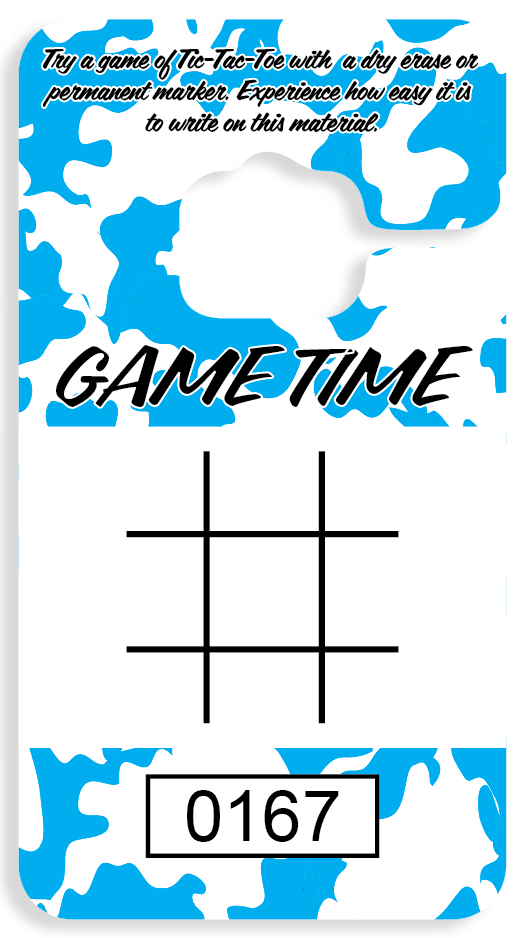
The 14-Mil synthetic material is thin, flexible, and durable. It’s guaranteed for 90 days but regularly lasts well past 12 months in real-world use. It’s also easy to write on—which matters for programs that need to write on their permits in the field. For example, putting a license plate number on the tag when it is distributed.
The key trade-off: 14-Mil synthetic does not support holograms, or foils security. Other security features like micro print and black light ink are available, but don’t provide the same security from a distance offered by holograms and foils. If your program doesn’t need those, it’s an excellent cost-effective choice. If security is a priority, step up to our composite options.
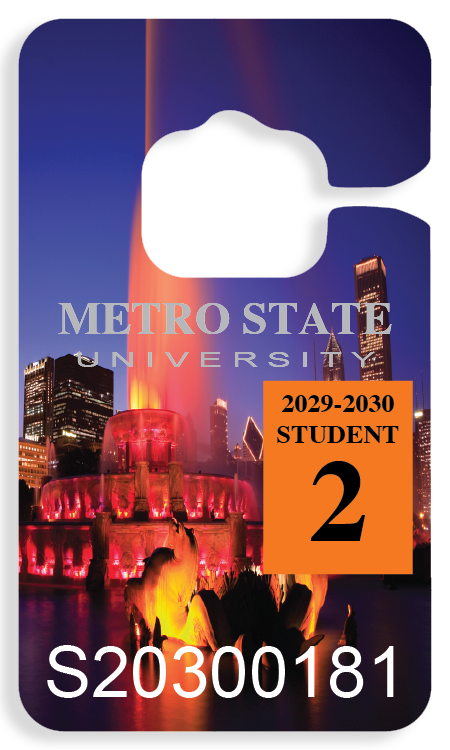
The 20-Mil composite features a synthetic plastic core laminated on both sides with a 5-Mil protective layer. The result is a stronger, more durable parking hang tag that protects printed ink from scratching—and opens the door to holographic security features, and foils.
Why it’s the most popular: It threads the needle between cost, durability, and customization. Most university parking permit programs, municipal programs, and business parking operations find this is exactly what they need.
The 30-Mil composite uses the same synthetic core as the 20-Mil but with a 10-Mil laminate on each side instead of 5-Mil. The result is noticeably stiffer in the hand.
The real difference: As hang tags get taller, thinner materials naturally want to curl. The 30-Mil composite resists that curl far better, maintaining a flatter, more professional appearance over time. There is no difference in lifespan between the 20-Mil and 30-Mil—this is about feel and form, not longevity.
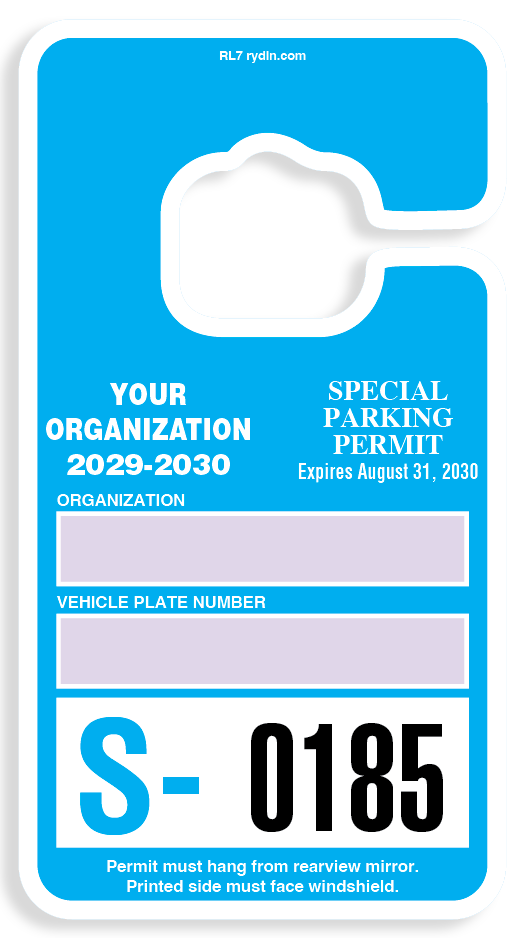
The synthetic core is plastic-based, and once laminated, the layers are nearly impossible to separate. If that level of bond isn’t critical to your program, replacing the synthetic core with a non-synthetic (paper-based) core is an economical way to get lamination and parking permit security features—holograms, foils, Metallic Blast™—at a lower cost.
Important note: Non-synthetic core laminates can be separated and forced apart by hand with effort. The product still stands up to the heat of a car in Arizona summers and Alaskan winters like all our materials, but it is still a paper core and suffers from the short comings of paper. For programs where tamper-resistance is critical, stick with the synthetic core.
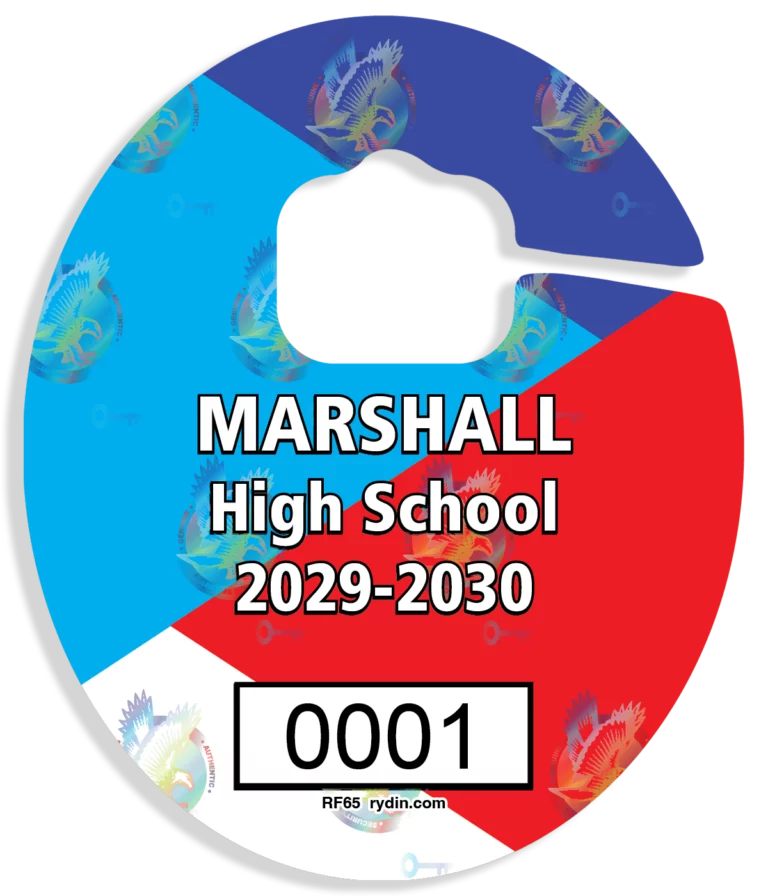
Instead of a standard front laminate, Rydin’s security laminate has a built-in holographic design that is part of the laminate layer itself—not applied on top. The 3D hologram catches and reflects light during the day, making valid holographic parking permits immediately recognizable from a distance and counterfeit parking tags immediately obvious.
Security laminate is available with both synthetic and non-synthetic core materials and can be combined with Metallic Blast™ for an added layer of visual security.
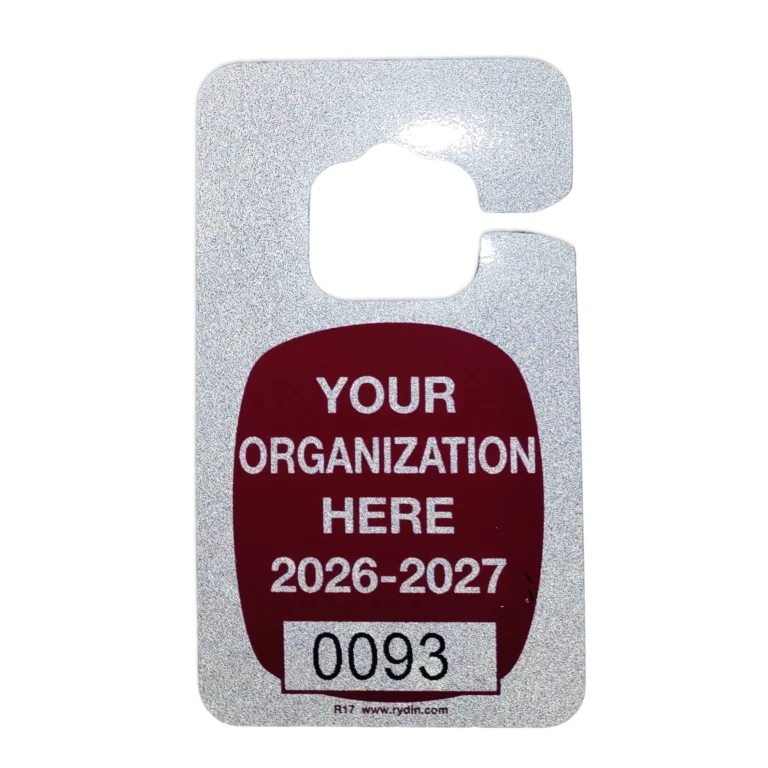
When parking enforcement happens at night the material choice changes entirely. Reflective parking hang tags are the answer. They are great when officers enforce by shining a light down a street rather than walking car to car or surveying vehicles in a large nighttime enforced parking lot.
To create a reflective parking permit, Rydin starts with a 23-Mil polyethylene (plastic) base and laminates an engineering-grade reflective layer onto the polyethylene. Shine a flashlight in the direction of the permit and it bounces light back immediately.
This is Rydin’s most popular option for municipal residential street parking permit programs. Officers can work an entire street from their vehicle—if the vehicle returns a reflective signal, the permit is valid. If not, that’s the vehicle to investigate.
One trade-off to know: Reflective hang tags can only be screen-printed, which means each color is a separate charge. For full-color printing, this material is not a great option. But if nighttime parking enforcement is your primary requirement, the reflective material delivers something no composite can.
As an added benefit, reflective parking tags are extremely difficult to counterfeit. The engineering-grade reflective layer cannot be reproduced on a standard copier or home printer.
Like composite materials, reflective polyethylene parking permits also come in a thicker 35-Mil version. Polyethylene has a natural curl tendency, and the taller the hang tag, the more noticeable it becomes. If your program uses a taller-than-standard format, the 35-Mil will stay flatter and hold its shape longer.
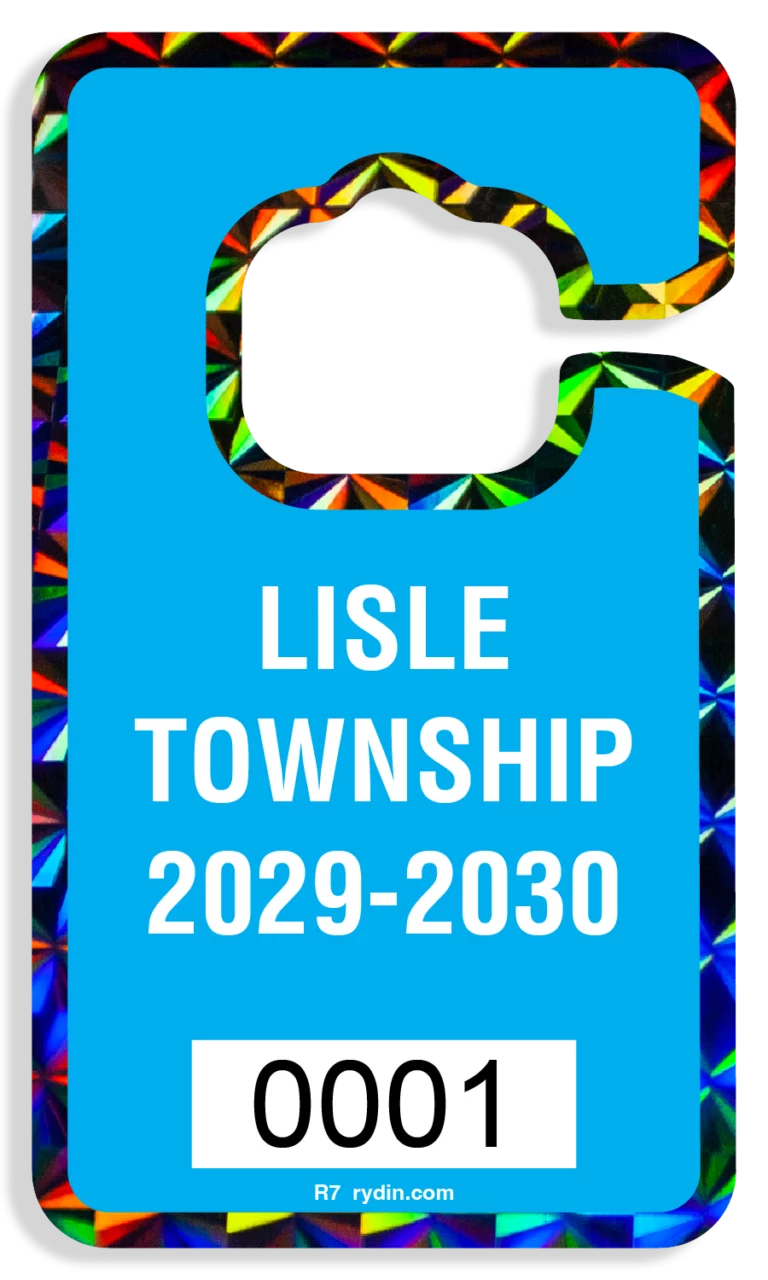
Prismcal is an alternative laminate option available for both 23-Mil and 35-Mil polyethylene. It creates a prismatic, rainbow-like visual effect that catches light dramatically and is essentially impossible to replicate. It’s ideal for programs with a daytime parking permit counterfeiting problem. Once it’s in use, a standard color copy looks nothing like the real thing.
This is one of those materials that’s better experienced than described. Request a sample to see the Prismcal effect in person.
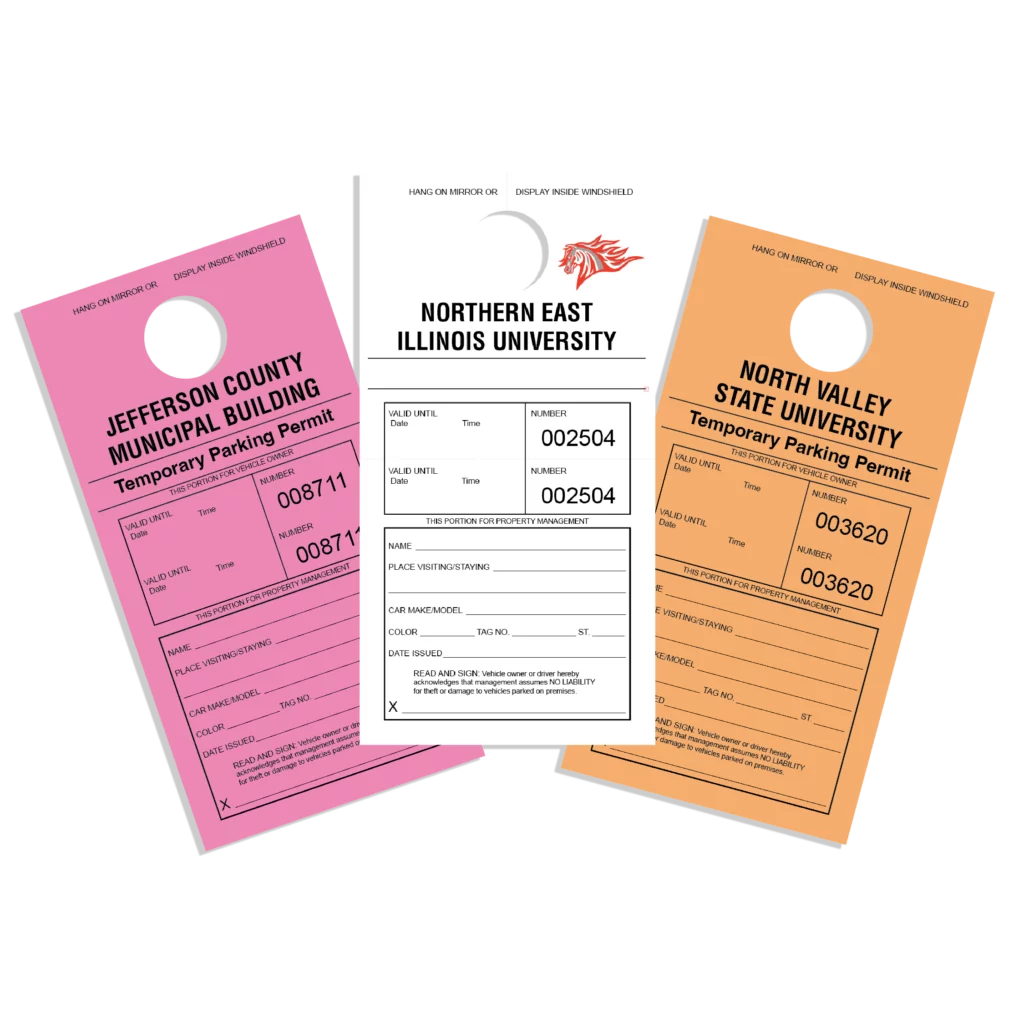
For temporary parking permits that only need to perform for a day, a week, or a short event, paper is the right call. Lower cost, easy to write on, and available in bright colors that make enforcement easy. Paper hang tags are the workhorse of visitor parking pass and short-term programs.
Astrobright® paper is lightweight, easy to write on by hand, available in bold fluorescent colors that enforcement staff can identify immediately, and inexpensive enough to replace as often as needed. It’s the go-to for visitor parking passes, event parking permits, and any program where passes are issued daily or weekly.
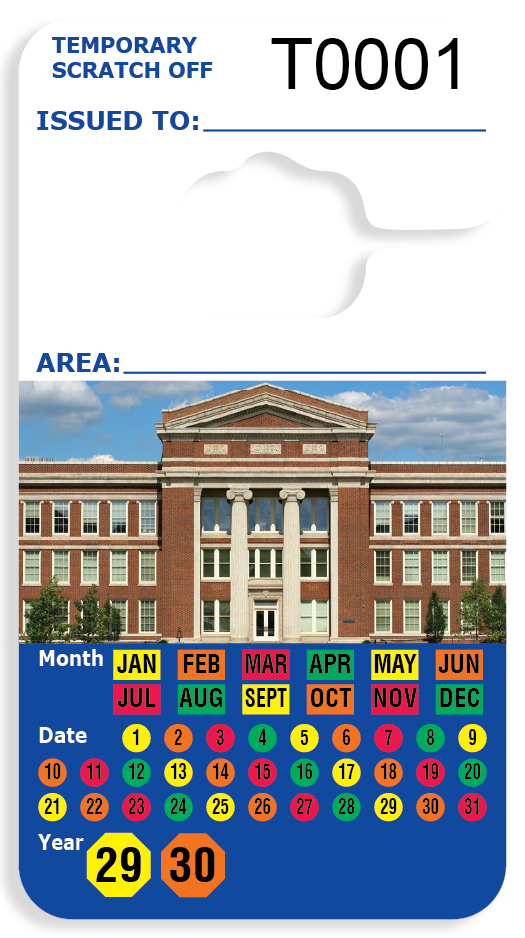
If you need something that holds up better with daily handling—or if your program uses scratch-off parking permits—100# white gloss cover paper stock is the right step up from Astrobright®. It’s still recommended for short-term use only, but it’s thicker, more rigid, and more resistant to tearing with repeated handling than Astrobright® paper.
Both Astrobright® and 100# white gloss cover paper stock can take advantage of security features like holograms, foils, and Metallic Blast™. If your program issues paper parking hang tags but still has counterfeiting concerns, these features are worth considering.
Use this table to quickly match your program’s needs to the right hang tag material.
| Material | Best for | Key strength | Note |
|---|---|---|---|
| 14-Mil synthetic | Annual, budget-conscious | Writeable, flexible, economical | No hologram option |
| 20-Mil composite (synthetic core) | Annual to multi-year; most programs | Most popular; 4-color + hologram ready | Rydin's #1 seller |
| 30-Mil composite | Taller tags; premium feel | Resists curl on taller tags; sturdier hand feel | Same lifespan as 20-Mil |
| Non-synthetic core composite | Security without top price | Hologram/foil at lower cost | Layers can be deconstructed |
| Security laminate (on composite) | High-security annual programs | 3D hologram built into laminate | Can pair with Metallic Blast™ |
| 23-Mil reflective polyethylene | Night enforcement | Engineering-grade reflectivity | Screen print only |
| 35-Mil reflective polyethylene | Taller reflective tags | Fights curl on taller tags | Higher cost |
| Prismcal laminate (on poly) | Daytime anti-counterfeit | Prismatic effect; cannot be copied | Request a sample |
| Astrobright® 65# card stock | Visitor/event/temp passes | Bright colors, writeable, low cost | Short-term only |
| 100# White Gloss Cover Paper stock | Scratch-off; sturdier temp use | Thicker than Astrobright® | Short-term only |
Selecting the right parking permit hang tag material is one of those decisions that seems minor until something goes wrong mid-program. The right choice means better enforcement, and lower total cost over the life of your permit cycle.
Rydin brings 70+ years of manufacturing expertise to every custom parking hang tag program. Our team helps you match materials to your specific environment, enforcement workflow, program length, and security requirements.
| What sets Rydin apart | What it means for your program |
|---|---|
| Material variety | From polyethylene to premium composites — every program has an option |
| Advanced security | Holograms, Prismcal, Metallic Blast®, and custom anti-counterfeit options |
| Customization | Full-color printing, sequential numbering, barcodes, and full branding |
| Peace of mind | Every product backed by a 1-year guarantee under normal use conditions* |
| Expert guidance | 70+ years of permitting expertise across universities, municipalities, and businesses |
*Guarantee applies to products used under normal conditions as defined in Rydin’s product guidelines.
The 20-Mil composite with a synthetic core is the most popular durable parking hang tag option for annual programs. For maximum rigidity and resistance to curling on taller tags, the 30-Mil composite is the step up. Both use a laminated synthetic core that is nearly impossible to delaminate, protecting printed ink and security features for the life of the permit.
Yes—but not to every material. Holographic parking permits are possible with composite materials (both synthetic and non-synthetic core) and on paper substrates. They are not compatible with 14-Mil synthetic material or reflective polyethylene base materials. If anti-counterfeit parking permit features are a requirement, start with a 20-Mil composite or higher
Engineering-grade reflective parking hang tags (23-Mil or 35-Mil polyethylene) are the standard for night parking enforcement. These tags bounce light back from a flashlight or headlights, allowing officers to verify permits without leaving their vehicle. They are also extremely difficult to counterfeit.
Both use the same synthetic core and lamination process. The 30-Mil has a 10-Mil laminate on each side instead of 5-Mil, making it noticeably stiffer and more resistant to curling on taller tags. There is no difference in expected lifespan between the two.
Prismcal is a specialty laminate for reflective polyethylene parking permits that creates a prismatic, rainbow-like visual effect. It is essentially impossible to replicate with a standard copier or printer, making it ideal for programs with daytime parking permit counterfeiting concerns.
For short-term use, paper is the right call. Astrobright® 65# card stock is most popular for visitor parking passes and event parking permits: bright, writeable, and inexpensive. For more durability or scratch-off features, 110# index stock is the upgrade. Both paper options can include holograms or foils if security is also needed.
Yes. Barcodes and QR codes can be added to any custom parking hang tag and are compatible with sequential numbering. For multi-year outdoor use, laminated composite materials protect barcode print from fading.
14-Mil synthetic is guaranteed 90 days but typically lasts 12+ months. Composite hang tag materials carry a one-year guarantee under normal conditions and commonly perform well beyond that. Paper hang tags are intended for short-term use only.
Metallic Blast™ is a specialty printing treatment that adds a metallic shimmer in any color to specific areas of the custom parking permit design—numbers, letters, logos, or other elements. It enhances both visual security and the premium appearance of the tag and is available on composite materials with both synthetic and non-synthetic cores.
A synthetic (plastic-based) core creates a tamper-resistant bond that is nearly impossible to delaminate, making it highly suitable for high-security parking permit programs. A non-synthetic (paper-based) core is more economical and still supports all security printing features, but the laminate layers can be separated. For tamper-resistance, choose synthetic core.
