
Parking administration directly impacts every core operational area within an organization. Finance tracks revenue and payment procession. Security and parking enforcement officers manage field compliance. Facilities oversee parking physical environments and access points. IT supports platform infrastructure. Drivers require an easy pathway to register vehicles, receive permits, submit payments, and appeal citations.
Managing these workflows through paper forms, disconnected spreadsheets, and manual data transfers creates significant operational friction.
A handwritten citation can take days to reach the administrative system. Missing permits trigger inquiry calls to staff. Manual data reconciliation consumes hours prior to budget meetings. Facility leaders waste time compiling data from multiple sources to answer basic questions about revenue, occupancy, or violation trends.
Parking management software unifies these functions into a single digital ecosystem.
Hospitals, universities, municipalities, corporate campuses, and large facilities can leverage cloud-based parking software to manage registration, payments, permit fulfillment, mobile enforcement, citation adjudication, appeals, and executive reporting from a centralized database.
This guide details how parking management software functions, what facility leaders should evaluate during program selection, and how Rydin PermitExpress® supports the complete parking permit lifecycle.
Parking management software is a centralized, cloud-based platform built to handle the administrative and operational workflows of a parking program.
Depending on the system and facility’s requirements, a parking management system may include:
The platform database becomes the single source of truth for the entire parking program. Registration data, payments, permit records, citations, and appeal logs remain accessible to authorized staff in real time.
Facilities with high-volume or transient parking populations use centralized data to reduce manual administrative labor and maintain operational control.
A parking management system generally supports the same lifecycle as the parking program itself: registration, payment, permit issuance, field enforcement, citation management, and reporting.
The parking lifecycle begins with driver and vehicle registration. Drivers access a custom-branded web portal designed to match the facility’s existing online environment. Users enter vehicle details, select the applicable permit(s), accept facility parking rules and regulations, and complete payment when a fee applies.
Registration data transfers immediately into the administrative platform, eliminating the need for manual data entry from paper application forms into a separate spreadsheet or database. Administrators can monitor live registration activity to maintain total program visibility.
Online registration delivers a consistent user experience while reducing the amount of manual data entry required from administrative staff.
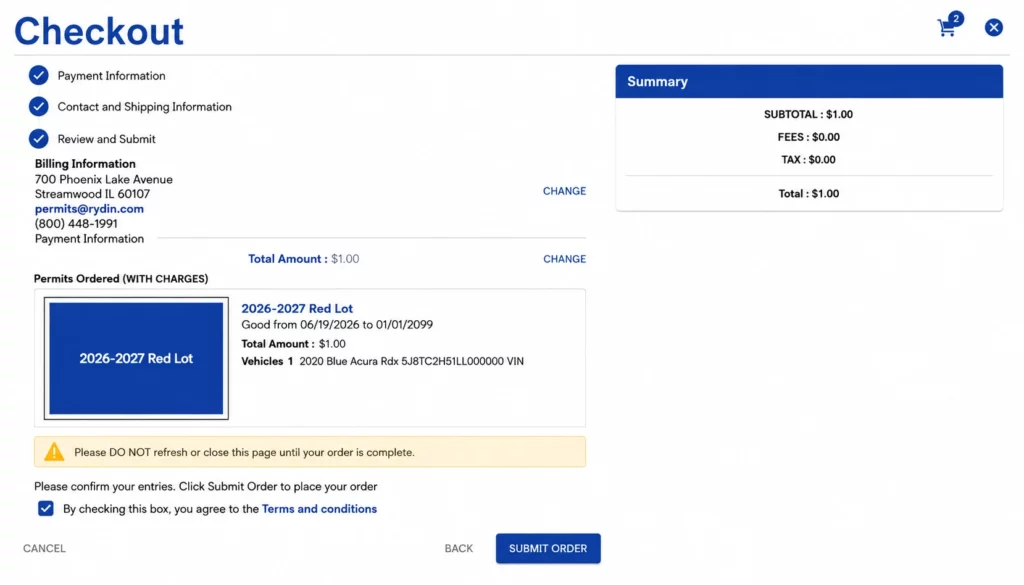
Following registration, administrators can select the fulfillment method for physical or digital parking permits.
For locations requiring counter verification, physical decals or hang tags can be issued in person. Alternatively, physical credentials can be mailed directly to the driver’s address.
With direct-mail fulfillment, registration and payment occur online, while physical permits are manufactured, packaged and shipped directly to the driver. Temporary digital parking permits are generated via email immediately, maintaining driver compliance while physical credentials are in transit.
Direct fulfillment reduces parking office foot traffic and simplifies distribution logistics during peak registration cycles. It also allows for the distribution of additional materials in the package.
Parking enforcement occurs in the field, allowing officers to access live permit data on site.
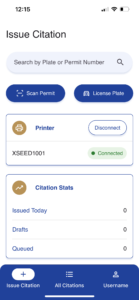
Using mobile enforcement applications like RPE Cite, officers can verify vehicles by scanning permit barcodes or reading license plates. Officers document violations, attach timestamped photo evidence, and issue citations directly from iOS or Android devices.
Bluetooth-connected mobile printers produce physical citations instantly on site.
Field data synchronizes with the administrative platform immediately. A permit purchased online is instantly visible to an enforcement officer checking the vehicle later that day.
Issuing a parking citation initiates several downstream tasks: logging the violation, processing payment, and adjudicating driver appeals.
A connected parking management system unifies these records into one dashboard. When an officer logs field notes and photos, the adjudicating administrator reviews the evidence directly alongside the driver’s appeal statement.
This creates an auditable record of every enforcement event, providing staff with complete context for fast, fair dispute resolution.
Facility leaders require reliable, exportable program analytics to make informed operational decisions.
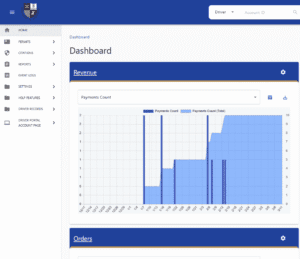
Parking program reporting modules can deliver insights into:
Rydin’s history in parking program management dates back to 1956, when they started manufacturing high-security parking permits in their Illinois printing facility. In 2011, they launched Rydin PermitExpress® as a cloud-based parking management software system.
That history gives Rydin a unique position within the parking industry. Rydin manufactures the physical parking permits and credentials used by facilities as well as providing the proprietary software used to manage and enforce the parking program.
Because physical permits and management software exist within the same operational framework, custom decals, hang tags, or clings are manufactured with specific security and identification features.
PermitExpress operates on a modular architecture and facilities can select and deploy only the capabilities their program requires today, with the option to expand over time.
Rydin PermitExpress® parking management software adapts to diverse operational footprints. Any institution, government body, or private organization managing restricted-access lots, complex permit rules, or field enforcement can streamline daily administration by implementing a parking management system.
University parking departments often manage large populations of students, faculty, staff, contactors, and visitors, with demand concentrated around the beginning of each academic year.
Online registration gives drivers a way to apply for and purchase permits without visiting the parking office. Direct mail fulfillment can distribute physical parking passes to students and staff, while temporary digital permits provide authorization during the transition to a physical parking permit.
The result is a registration process that can accommodate significant seasonal volume while keeping administrative records in one centralized system.
Healthcare facilities have parking requirements that reflect the complexity of their operations. Employees may work around the clock, physicians and contractors may require different access privileges, and facilities may require separate arrangements for patients and visitors.
PermitExpress can support different permit categories and registration requirements within the same parking management system, giving administrators a centralized record of authorized vehicles.
Corporate campuses and commercial properties may manage employee parking, tenant allocations, reserved spaces, contractor, and visitor parking. Hybrid work schedules and employee turnover can also change the parking population throughout the year.
Online registration gives employees and other authorized users a self-service process for managing their vehicle information and permits. Administrators maintain visibility into current registrations and can manage the program from a centralized system.
Government parking programs require careful record keeping around permits, payments, citations, and appeals.
Mobile parking enforcement allows officers to record violations in the field, including supporting photographs and citation details. Drivers can access online services for parking transactions and citation-related activities, reducing the amount of business that needs to take place at a government office.
Centralized records also give administrators a consistent and reliable source of information for reporting and program administration.
Residential properties often have parking rules tied to individual units, residents, guests, and vehicles.
A parking management system with online vehicle registration gives residents a convenient way to provide their information and request parking credentials. Physical decals and hang tags can then provide visible identification for authorized vehicles within the community.
For property managers, keeping vehicle and permit information organized can make parking administration easier to manage as residents and vehicles change.
Airports and transit facilities may have several distinct parking populations, including employees, contractors, travelers, and service providers.
These environments can require different permit types and credentials depending on where a vehicle is authorized to park.
PermitExpress supports vehicle registration and permit management, while Rydin’s physical parking permits can incorporate barcodes, QR codes and security features suited to the facility’s requirements.
Ports, freight terminals, distribution facilities, and other logistics environments may have large numbers of commercial vehicles entering and leaving controlled areas.
Parking and vehicle authorization records can include employees, drivers, contractors, vendors, and other third parties.
The Rydin PermitExpress parking management software platform provides a centralized vehicle registration system. Rydin can produce customized parking permits and passes for different user groups and access requirements.
Evaluating parking software requires a thorough assessment of current operational workflows: Where does registration occur? Who processes payments? How are permits distributed? How do officers verify vehicles? How are appeals logged? How does management access reports?
The answers highlight operational bottlenecks where software automation delivers the highest return on investment.
Parking programs evolve alongside organizational growth. Facilities may start with online registration and add mobile enforcement, direct-mail fulfillment, or visitor management as operational needs expand. A modular platform scales without requiring platform replacement.
Field enforcement relies on live data. Real-time synchronization ensures registration records, payments, field citations, and administrative updates remain aligned across the organization without manual file updates.
Parking operations involve staff across security, facilities, finance, and customer service. Rydin PermitExpress includes unlimited user accounts at no additional fee, allowing managers to assign precise access permissions based on employee roles.
Field officers need efficient tools to perform checks, attach photo evidence, and issue citations on site. Mobile citation apps streamline field enforcement and eliminate paper ticket entry at the end of shifts.
Photos captured at the time of a violation provide conclusive proof during dispute reviews. Viewing photos, officer logs, and driver statements inside one dashboard speeds up appeal processing.
Parking data must be easy to extract and analyze. Exportable reporting tools give facility leaders direct access to revenue metrics, violation statistics, and lot usage trends.
Parking operations face firm seasonal deadlines and peak activity windows. Access to knowledgeable, US-based technical support ensures program continuity during major registration drives or system updates.
Every facility operates with distinct policies, permit types, enforcement rules, and administrative structures.
Contact a Rydin parking management software specialist to evaluate your current program requirements and schedule a customized software demo.
Yes. Systems like Rydin PermitExpress support integrated printing and direct-to-driver fulfillment. Physical permits ship directly to the user within 48 hours, while temporary digital permits are emailed immediately to ensure continuous coverage.
Officers use a mobile application on a smartphone or tablet to scan permit barcodes or license plates, verify authorization, capture violation photos, and issue digital or printed citations on site.
Drivers log into the online portal to submit appeal statements. Administrators review the driver’s submission alongside officer notes, timestamped violation photos, and permit history within the management dashboard.
